



Here’s a full update on the baboon situation in Cape Town (as of 19–20 November 2026).
What happened
Authorities relocated the Waterfall troop (from Simon’s Town) to permanent captivity over the weekend of 13–14 November 2026.
- The Cape Peninsula Baboon Management Joint Task Team (CPBMJTT — City of Cape Town, SANParks and CapeNature) carried out the operation after permits were issued on 12 November.
- 45 baboons were captured (27 on the Friday, 18 on the Saturday). One elderly female was euthanised after veterinary checks found a chest growth, fluid in her bowels and no teeth. 44 baboons were released into a purpose-built enclosure.
- One remaining female still needed to be captured at the time of the main updates; she was being monitored.
- Females received contraceptive implants. Males were not vasectomised (contrary to some earlier reports/plans).
- The troop is now at the Urban Wildlife Centre at Kogelfontein (near Scarborough/Red Hill), in a 2.31-hectare enclosure next to Table Mountain National Park. Officials say the space exceeds Global Federation of Animal Sanctuaries minimum standards for Old World primates by about 5.5 times. It has vegetation, ponds, climbing structures, shelters and enrichment feeding. The centre is not open to the public and will provide lifelong care with no breeding allowed.
The Seaforth troop (about 16 animals, also in Simon’s Town) is still free-ranging and is next in line for possible relocation.
Official reasons
Authorities describe the move as a last resort under the Cape Peninsula Baboon Management Action Plan (approved late 2025). They cite:
- Years of severe, persistent human-baboon conflict in the densely urban Simon’s Town area.
- Limited remaining natural low-lying habitat.
- Ongoing risks to the baboons (pellet-gun shootings, dog attacks, vehicle collisions, scavenging rubbish, entering homes/businesses, roosting at the Naval Base).
- Public safety and welfare concerns.
They frame captivity as preferable to culling and say more than 530 free-ranging baboons remain across the Cape Peninsula.
Current status of the relocated baboons
Officials report the 44 animals are adjusting well: playing, foraging, using ponds, climbing and resting on the provided structures. They are under 24/7 monitoring with ongoing veterinary oversight. The SPCA has confirmed they observed no cruelty during capture/transport and that the animals appeared to be settling in when inspected.
Opposition and protests
The relocation has sparked strong public backlash, protests and criticism from animal-welfare groups:
- Demonstrators gathered outside the Kogelfontein centre (including a silent protest with flowers on the fence). Some tried to block transport vehicles during the capture.
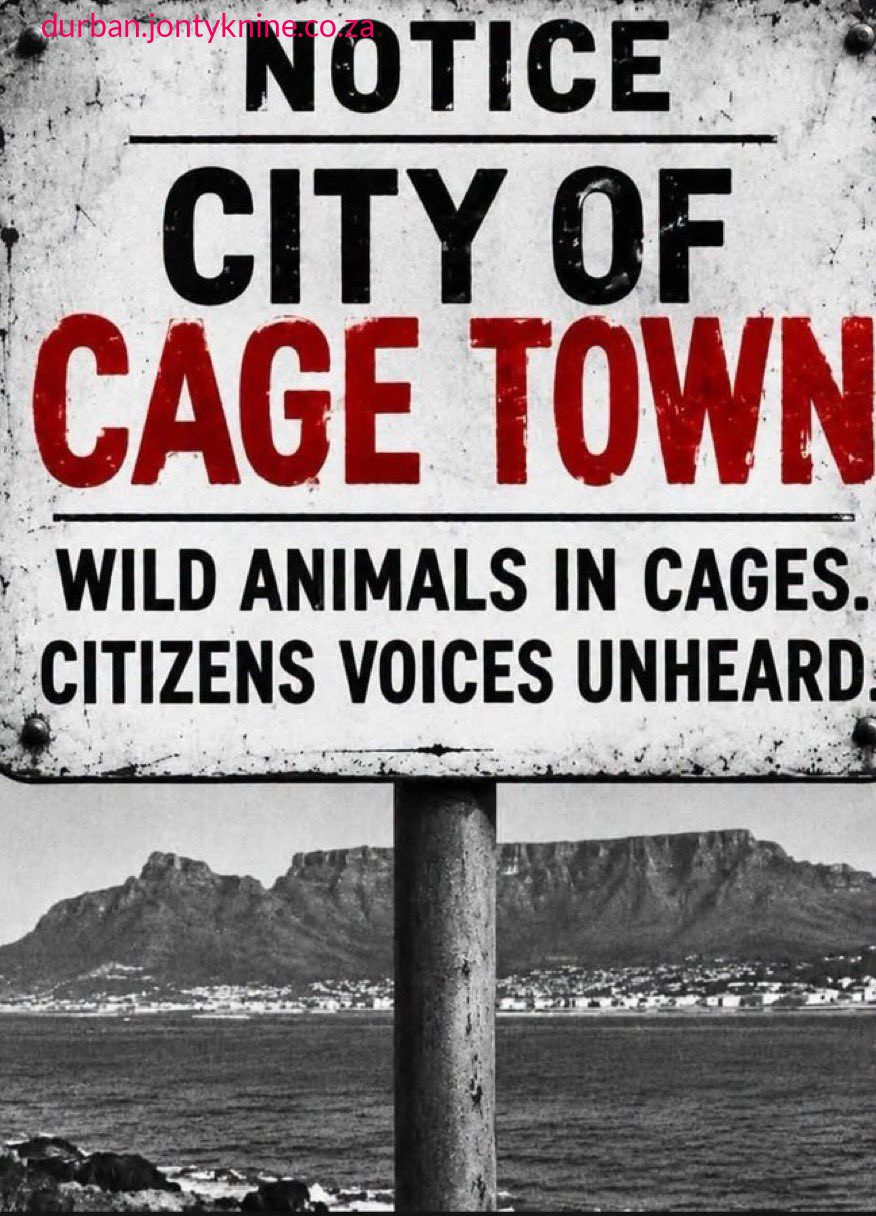
- Critics argue that permanent captivity is not conservation, that the enclosure is too small for a full troop long-term, and that the root causes (urban expansion, poor waste management, human behaviour) are not being properly addressed.
- The Cape of Good Hope SPCA monitored the operation for welfare reasons only and does not support permanent captivity as a general solution. It has put authorities on formal legal notice that it will challenge any further decisions to permanently confine healthy free-ranging troops (including seeking urgent interdicts if necessary). It will conduct regular inspections at Kogelfontein and wants advance notice of any future plans.
- Groups such as the EMS Foundation, Wildlife Animal Protection Forum South Africa and IFAW have also criticised the approach.
Broader context
Cape Town has long struggled with human-baboon conflict on the Peninsula as suburbs expand into baboon habitat. Management has included rangers, aversive conditioning, waste-bin measures and fencing in some areas. The current strategic plan prioritises keeping most troops free-ranging while removing the most conflict-prone urban troops as a last resort. The City has published the relocation permit and the centre’s management plan online to counter misinformation.
In short: The Waterfall troop is now in lifelong captivity at Kogelfontein and reported to be settling in. The Seaforth troop is still at risk of the same fate. Authorities defend the action as necessary welfare and safety intervention; many residents and welfare organisations see it as an unacceptable loss of wild freedom and are organising resistance and legal pushback against further moves.