


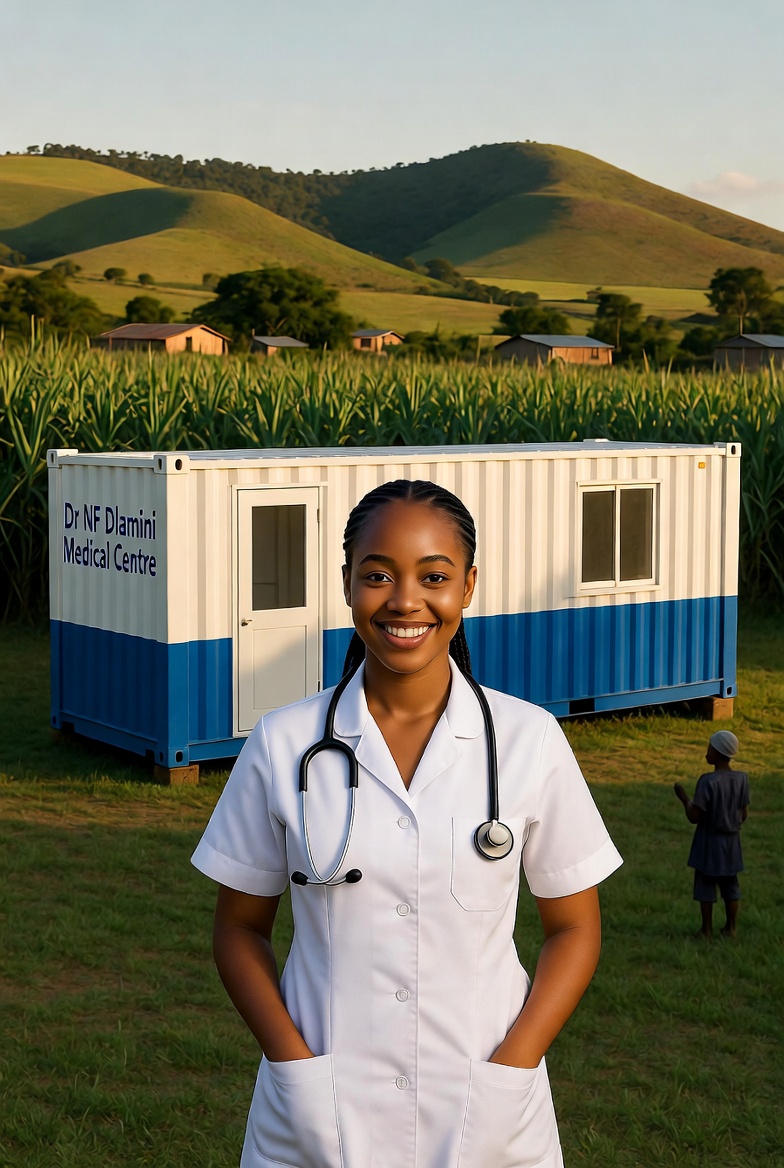
This initiative directly addresses longstanding gaps in rural healthcare access. It is a personal story rooted in her upbringing and a practical example of grassroots innovation in a country where public health infrastructure often falls short in remote areas.
Background and Motivation
Dr. Dlamini qualified as a doctor from the University of the Witwatersrand in December 2020. She completed her internship in Durban and community service in Mount Fletcher, Eastern Cape. After a period of unemployment, she opened a private practice in Durban to generate income and save capital.
Her drive stems from childhood experiences in a rural community with limited healthcare. Her late grandmother, who was diabetic, had to take multiple taxis (often four round trips) to access care as a pensioner. This hardship motivated Dlamini: “I’ve always wanted to be a doctor… My dream came from living in an area with limited healthcare services.” The clinic honors her grandmother (“This one is for ugogo”).
She chose a shipping container for affordability—a conventional building was out of reach. The two-room container was craned into place, and a TikTok video of the process went viral (over 200,000 views), sparking widespread praise and conversations about rural healthcare.
Clinic Operations and Services
- Location: Embedwini (also referred to as Emambedwini or near Kwaswayimane), Wartburg, a rural area in KZN.
- Fees: R300 per consultation, which includes medication or treatment. Not free, but kept low and self-funded. She covers staff (receptionist, professional nurse) and operations.
- Services: Primary healthcare for adults and children, chronic disease management, pregnancy ultrasounds, HIV screening, blood pressure and sugar testing, Pap smears, and men’s/women’s health services. A nurse provides on-site support when the doctor is absent; telephonic consultations are available.
- Schedule and Support: Operates three days a week; Dlamini balances it with her Durban practice. It runs on a generator pending Eskom electricity connection.
- Future Vision: Expand to dentistry, optometry, X-rays, nursing care, and job creation for unemployed healthcare professionals. She hopes for funding to make services free.
This model echoes broader South African efforts, such as Unjani Clinics (nurse-owned container or modular clinics) and other container-based health posts, which repurpose affordable, quick-to-deploy structures for underserved areas.
Broader Context: Rural Healthcare Challenges in South Africa (Especially KZN)
South Africa faces stark urban-rural disparities in healthcare. Rural provinces like KZN often have fewer doctors per capita, long travel distances, inadequate facilities, staff shortages, and issues like load-shedding affecting equipment and cold chains. Public clinics can be overcrowded or under-resourced, leading to delayed care for chronic conditions (e.g., diabetes, HIV, hypertension) prevalent in rural communities.
Container clinics offer advantages: lower upfront costs, faster setup, modularity (can be expanded), and portability. Challenges include limited space, reliance on generators (fuel/maintenance costs), regulatory compliance (licensing, waste disposal), unreliable utilities, and sustainability without steady revenue or grants.
Dr. Dlamini’s approach—private savings funding a private practice serving rural patients—complements (but does not replace) the public system. It highlights unemployment among qualified professionals alongside community needs. Similar stories exist, such as doctors returning to hometowns or nurses opening primary care clinics via networks like Unjani.
Implications and Nuances
Positive Impacts:
- Access: Brings care closer, reducing travel burdens, costs, and time lost—especially for the elderly, children, and those with chronic illnesses.
- Inspiration: Her viral story encourages other professionals to “start where you are with what you have.” It humanizes the doctor shortage and sparks dialogue on public-private solutions.
- Economic: Creates local jobs and demonstrates entrepreneurship in healthcare. Affordable fees make it viable for working-poor residents.
- Preventive Focus: Services like screenings and chronic management can reduce downstream hospital burdens.
Challenges and Edge Cases:
- Financial Sustainability: Self-funded models risk burnout or closure without support. Balancing urban private work with rural service is demanding.
- Scale: One container serves a limited population initially; expansion depends on funding/demand.
- Equity: R300 may still be a barrier for the poorest (though lower than many private options). Free public alternatives exist but with potential queues and stockouts.
- Regulatory/Operational: Needs proper licensing, drug supply chains, and emergency referral pathways. Rural areas face issues like poor roads or seasonal access.
- Broader Systemic Issues: This fills a gap but underscores needs for better public investment, NHI implementation debates, doctor retention incentives in rural areas, and infrastructure (e.g., reliable electricity).
Related Considerations: Climate resilience (extreme weather affecting containers), integration with public services (referrals), data/privacy in small practices, and cultural trust-building in communities wary of new providers. Word-of-mouth is helping, but uptake may grow gradually.
Why This Matters
Stories like Dr. Dlamini’s illustrate bottom-up solutions in complex systems. They blend personal sacrifice, innovation (repurposed containers), and community focus. While not a panacea, they highlight how individual agency can drive incremental progress amid systemic challenges. Her work honors her roots while addressing real needs—potentially inspiring replications or partnerships.