
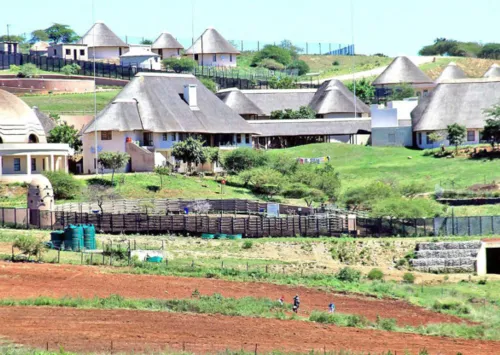
Makhanya (of Minenhle Makhanya Architects) served as Zuma’s private architect and was later appointed (without a competitive tender) as the Department of Public Works’ principal agent for the state-funded “security upgrades.” The project’s costs escalated dramatically—from an initial estimate of around R27–28 million to roughly R215–246 million by the time of major investigations. The SIU argued that Makhanya over-designed features, authorised non-security works (such as elements tied to the visitors’ centre, amphitheatre/cattle kraal area, chicken run, “fire pool,” roads, parking, and other items), overpaid suppliers, paid for incomplete or undefined work, and was himself overpaid (by roughly R5–5.6 million in some accounts). His firm received about R16.5–17 million in fees.
Background and key investigations
The Nkandla controversy (“Nkandlagate”) centred on the use of public funds for what were presented as security upgrades at Zuma’s rural KwaZulu-Natal homestead. Public Protector Thuli Madonsela’s 2014 report (“Secure in Comfort”) found uncontrolled scope creep after Makhanya took on the dual/conflicted role, improper appointments without proper tender processes, and undue benefits to the Zuma family. It recommended that Zuma repay a reasonable portion of non-security items.
The Constitutional Court later ruled (2016) that the Public Protector’s remedial action was binding. National Treasury calculated Zuma’s personal liability at about R7.8 million for specific non-security features (visitors’ centre, amphitheatre, cattle kraal, chicken run, swimming pool/fire pool), which he paid (via a loan) later that year.
Separately, the SIU (mandated by Zuma in late 2013) investigated and in 2014 instituted the large civil claim against Makhanya in the KwaZulu-Natal High Court (later proceeding in the Special Tribunal). The SIU contended the project should have cost far less under proper Cabinet/police/military-approved security parameters, that Makhanya’s appointment was irregular/invalid, and that his conduct caused the bulk of the state’s losses. It sought repayment of the calculated loss (around R155.3 million), interest, costs, and related declarations. The SIU report also noted enrichment of the Zuma family through increased property value while placing primary financial recovery focus on the architect.
Later proceedings
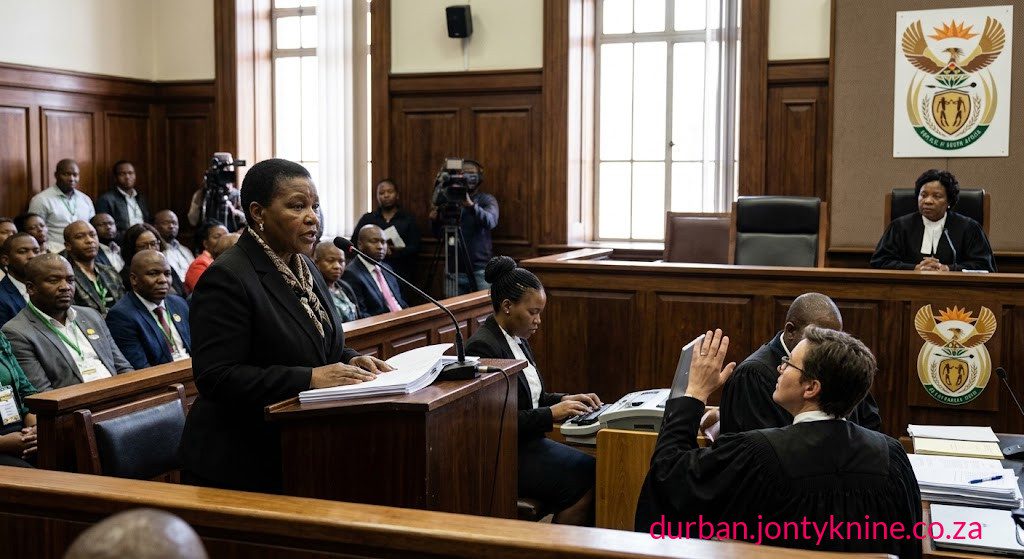
Evidence hearings occurred before Special Tribunal Judge Kate Pillay (Pietermaritzburg) around September–October 2021. SIU forensic witnesses described rapid cost increases after Makhanya’s August 2009 appointment, secrecy around the appointment process, lack of open tender or clear guidelines, variation orders for non-security items, overpayments, and mismanagement. Makhanya (who had run out of funds for legal representation and was appearing in person, having pleaded limited means) sought postponements; he failed to appear on at least one key day (citing hospitalisation), leading the SIU to contemplate default judgment. The matter was postponed into early 2022.
Public reporting does not show a widely covered final judgment specifically quantifying an order for “over R147m” in the years immediately after those hearings, though the original SIU claim figure remains the reference point in summaries of the case. Wikipedia and contemporaneous coverage continue to note the SIU’s R155.3 million action against him as of the mid-2010s filings.
Broader context and implications
Critics (including opposition parties at the time) argued that focusing recovery primarily on the architect risked making him a scapegoat while higher-level political and departmental accountability (ministers, Public Works officials) was limited—Zuma received only a formal reprimand for the ministers involved, and his personal repayment was a small fraction of total spend. Supporters of the SIU approach noted that percentage-based professional fees created incentives for scope expansion and that contractual/professional duties as principal agent provided a clear recovery path. The overall Nkandla saga highlighted failures in procurement (section 217 of the Constitution, PFMA, Treasury rules), conflicts of interest, weak oversight of “security” projects, and the binding nature of Public Protector remedial action.
In short, the headline refers to the long-running SIU civil claim (filed ~2014, with active Special Tribunal hearings into 2021–2022) seeking recovery of roughly R155 million in alleged state losses from the Nkandla architect due to irregular appointment, over-design, unauthorised works, and related mismanagement. The exact current status of any final enforceable order or recovery should be verified via recent court records or SIU statements, as media coverage of a definitive “ordered to return over R147m” outcome is limited in readily available sources.