



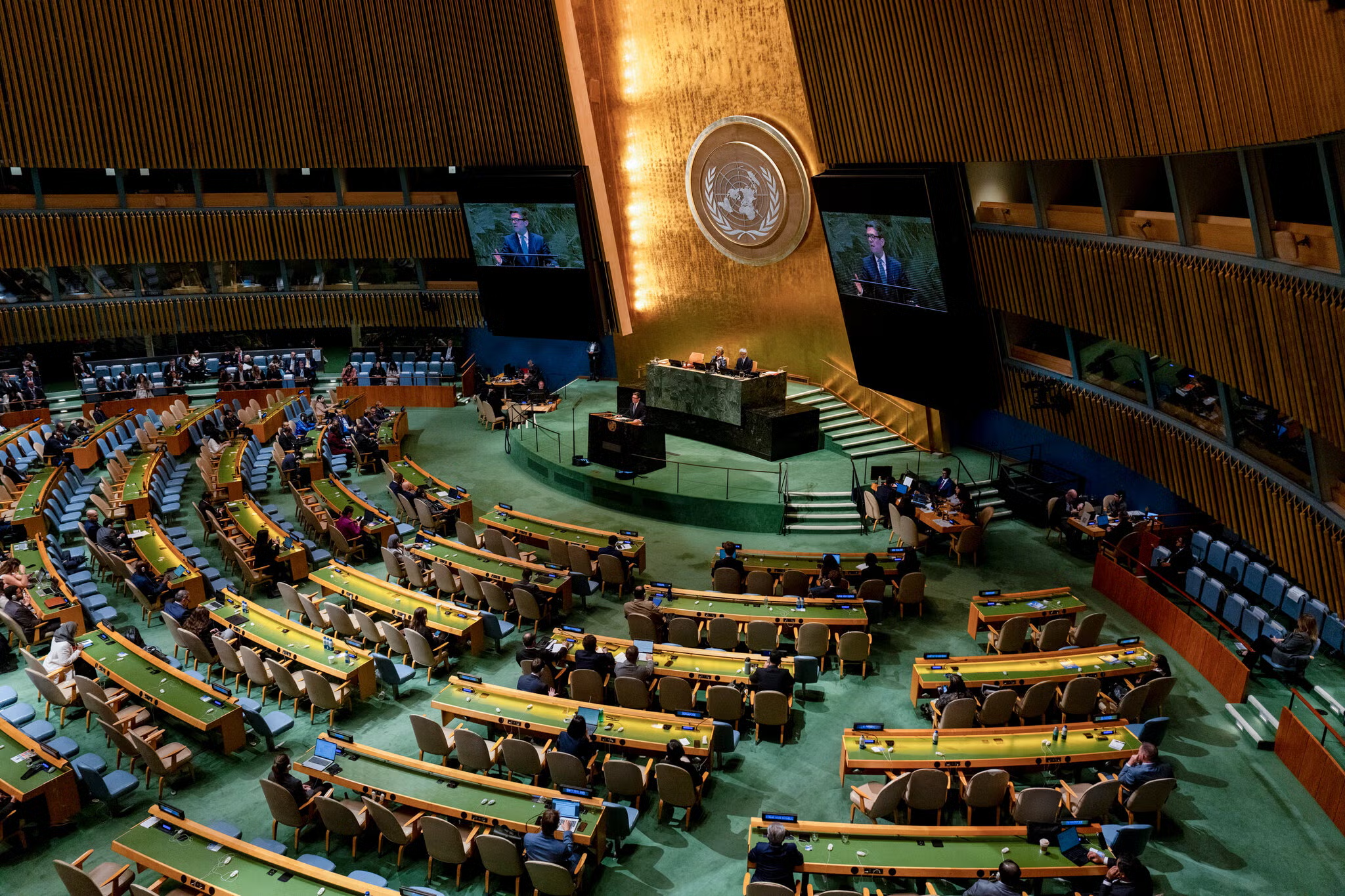
Trump, speaking on Tuesday, framed a binary choice on the nearly seven-month U.S.-Israeli war with Iran (launched with joint strikes earlier and expanded significantly around February 2026). He said he faced a “big decision”: whether to strike a deal that would allow Iran to “rebuild and create a far greater country than it ever was before—maybe one of the greatest in the Middle East or even the world,” or to “annihilate the Islamic Republic and do it quickly, never giving them a chance to kill and destroy people and countries again.” He added language about driving Iran “into hell with no chance of survival and no hope of future greatness or generations.” Trump claimed the war had prevented Iran from obtaining a nuclear weapon, portrayed Tehran as the former “bully of the Middle East” and top sponsor of terror, defended prior military actions (including references to operations that struck nuclear-related sites), and urged other nations to maintain economic isolation of Iran until it ended attacks on shipping and support for terrorism. He predicted a deal would come “right after the [U.S. midterm] election” (November 2026), arguing Iran was waiting to gauge his political standing, while noting he himself was not running. The remarks came in a forum traditionally focused on peace and multilateralism and contrasted with the UN’s founding purpose of preventing the scourge of war.
Sideline Diplomacy and Related Meetings
Despite the rhetoric, U.S. envoys Steve Witkoff and Jared Kushner held talks (described by Trump as a “very good” or “very productive” multi-hour meeting, with mediation/shuttling by parties including Qatar) with Iranian officials, including Foreign Minister Abbas Araghchi. Trump publicly confirmed the contact. Qatar’s Emir Sheikh Tamim bin Hamad Al Thani and other Gulf leaders met U.S. officials; Trump also conferred with leaders from Bahrain, Kuwait, Oman, Qatar, Saudi Arabia, the UAE, and Jordan on the Iran conflict. Some Iranian accounts framed the contacts as responding to U.S. requests and restated conditions such as ending the naval blockade, releasing frozen assets, and halting hostilities (including related fronts). Discussions touched on reopening the Strait of Hormuz (a critical energy chokepoint disrupted by the war, contributing to higher oil/fuel prices and trade impacts).
Other Leaders’ Responses and Warnings of Divisions
UN Secretary-General António Guterres (in a farewell address) warned that “the fault lines in our world are widening,” citing geopolitical rivalries, wars, climate change, and AI, and stressed interdependence over fragmentation or unilateralism. He urged recognition that even superpowers’ power “isn’t so super.” Many leaders largely avoided direct engagement with Trump’s Iran threats or specific criticism of the U.S. role. Those who addressed the conflict or broader tensions tended to urge negotiations, peace, or an end to escalation rather than endorse further force.
- Qatar’s emir called for a return to talks for a “lasting solution that ensures security and stability for the entire region, including Iran.”
- Leaders from affected U.S. allies (Jordan’s King Abdullah II, Turkey, and others) often focused more on criticizing Israel’s conduct in Gaza or broader regional impacts (disrupted trade, higher fuel prices, Iranian strikes affecting neighboring states) than on Trump’s remarks.
- On Wednesday, Iranian President Masoud Pezeshkian addressed the Assembly, rejecting surrender, affirming readiness for dialogue and diplomacy “without accepting the language of force,” and framing Iran as a victim of aggression/terrorism. He named Trump and said Tehran would not bow. Iran’s armed forces dismissed Trump’s comments as propaganda and vowed readiness for severe responses. Iran’s delegation had largely walked out or minimized presence during Trump’s speech; a U.S. delegate reportedly walked out during Pezeshkian’s address, and Israel’s delegation also left.
Other notable notes from the gathering included Trump’s broader “winner-takes-all” framing of U.S. power (referencing actions in Venezuela, where he invoked “to the victor belong the spoils” regarding oil, and comments on Greenland, Cuba as a “failed state,” etc.), which some coverage described as rejecting core multilateral premises of the UN. Cuban representatives walked out over related remarks. Brazil’s President Lula criticized Security Council paralysis. The war’s wider effects—thousands killed, energy market disruption, secondary sanctions risks (e.g., on airports handling Iranian flights), and strain on U.S. approval ratings—formed the backdrop.
Context, Nuances, and Implications
The conflict originated with U.S.-Israeli actions against Iran (nuclear and related concerns cited by the U.S. side; Iran has long denied seeking nuclear weapons). A prior June cease-fire effort involving Qatar had collapsed. Trump’s approach mixed maximalist public threats (consistent with prior coercive-diplomacy style) with private/channel diplomacy, creating a high-stakes dynamic amid midterm politics, regional spillover (including strikes affecting U.S. bases in Jordan and attacks linked to Iran-backed groups), and global economic pressure. Other leaders’ relative restraint on the specific threats, while emphasizing divisions and the need for talks, underscored a gap between unilateral military/pressure strategies and traditional UN norms of collective security and negotiation.
Markets and energy stakeholders watched closely for any breakthrough on Hormuz access or de-escalation. As of the latest reports (around September 23), no comprehensive deal had been announced, though mediators continued work and both sides signaled openness under conditions. The episode highlighted ongoing challenges for the UN as a venue for resolving major power conflicts and the practical limits of summit diplomacy when core parties remain far apart on trust, terms, and the use of force. Further developments depend on follow-up talks, domestic U.S. politics, Iranian internal dynamics, and whether economic or military pressure produces movement toward a settlement or further escalation.