

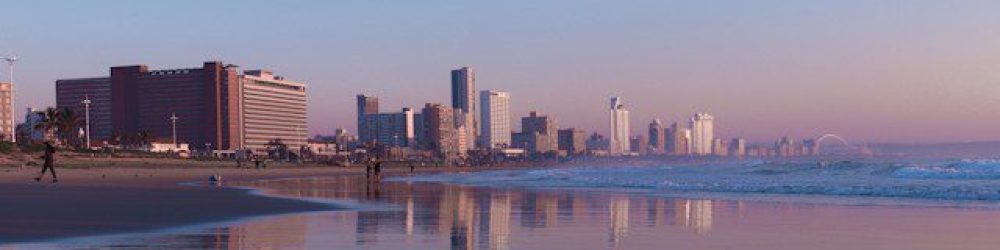
A full bench of the Pietermaritzburg High Court (KwaZulu-Natal High Court), including Judge President Thoba Poyo-Dlwati, ruled on 30 September 2026 that the municipality had no reasonable prospects of success on appeal (and no compelling reasons justifying leave to the Supreme Court of Appeal). The decision reinforces pressure on the metro to fix longstanding wastewater infrastructure failures that have led to raw sewage entering rivers, residential areas, and the ocean, repeatedly affecting Durban’s beaches and public health.
Background to the original December 2025 judgment
The case stemmed from applications by the Democratic Alliance (DA) and, separately, ActionSA. The parties sought to compel compliance with legally binding directives and compliance notices issued in 2021–2022 by the KwaZulu-Natal Department of Economic Development, Tourism and Environmental Affairs (EDTEA) and the Department of Water and Sanitation. These directed eThekwini to investigate and stop raw sewage discharges, develop time-bound remedial plans, and prevent further pollution of water resources (including the uMngeni River and coastal areas).
In its December 2025 ruling (Democratic Alliance v eThekwini Metropolitan Municipality and Others), the court found that the municipality had:
- Breached multiple notices and directives.
- Violated provisions of the National Environmental Management Act (NEMA, sections 28(1) and 31L(4)), National Water Act (section 19(1)), National Environmental Management: Integrated Coastal Management Act (section 69), National Environmental Management: Waste Act (section 16(1)), and Section 24 of the Constitution (the right to an environment not harmful to health or wellbeing).
- Operated certain wastewater treatment works (WWTWs) without the required water-use licences (unlawful).
- Failed to adequately inform the public about pollution risks.
Key elements of the order included requirements for eThekwini to:
- Detail how it would comply with the seven key notices/directives on inadequate wastewater treatment.
- Publish weekly E. coli readings for swimming beaches (on its website, social media, and at beaches).
- Secure authorisations for approximately 10 WWTWs operating without valid licences.
- Produce a detailed action plan with time frames to address infrastructure challenges.
Problems were not solely attributable to the devastating April 2022 KwaZulu-Natal floods (or subsequent vandalism/theft). Court findings noted that many issues predated the floods by years (spanning five to seven years in some cases) and remained unresolved. The municipality had also admitted lacking licences for some works.
The leave-to-appeal decision and municipality’s arguments
eThekwini sought leave to appeal the entire judgment and order, raising roughly nine grounds. These included claims that the original court failed to properly assess “reasonableness” of its steps; did not correctly apply the Plascon-Evans rule on factual disputes; improperly relied on evidence from the parallel ActionSA matter; erred on licensing and beach-reopening findings; and wrongly ordered weekly E. coli publication and costs against it.
The full bench rejected these. It held that non-compliance with the clear, time-bound directives was effectively undisputed (even the municipality’s own lawyers conceded non-compliance in key respects). It was “axiomatic” that reasonable steps to safeguard water resources, rivers, beaches, and residents’ homes had not been taken—issues that had affected residents for years and needed no further investigation. Financial-constraint arguments were dismissed for lack of supporting budget data. Claims that infrastructure was designed for a smaller population (pre-2000 boundary expansion to serve ~4 million people) did not excuse ongoing failures.
Reactions and implications
Municipal spokesperson Senzelwe Mzila stated that the city had been complying with the December judgment and was only appealing “certain aspects,” while already publishing E. coli beach readings on its website. The municipality indicated it was still studying the September 2026 ruling.
Critics, including DA KwaZulu-Natal chair and Minister of Public Works and Infrastructure Dean Macpherson, highlighted the irony of spending millions on legal fees instead of fixing the problems. The DA framed the outcome as a victory for residents entitled to functioning sewer infrastructure, clean rivers, and safe beaches, and criticised the ANC-IFP-EFF-led administration for prioritising litigation over service delivery. It called for immediate full implementation of the order, a public repair timetable, and disclosure of legal costs incurred in the appeal bid. Local government elections are scheduled for November 2026, placing service-delivery failures (including sewage) under heightened political scrutiny.
The ruling does not create entirely new obligations but reinforces existing legal duties under environmental and water legislation and the Constitution. Broader context includes South Africa’s widespread municipal wastewater challenges (raw sewage issues reported in multiple metros), tourism and health risks from polluted beaches, and the high estimated costs of rehabilitation (previously cited in related proceedings in the billions of rand). eThekwini has pointed to action plans and some progress, but the courts have found persistent shortfalls.
In short, the municipality must now focus on compliance rather than further appeals of this order. Failure to deliver measurable improvements on sewage spills, licensing, monitoring/transparency, and infrastructure repair risks ongoing legal, environmental, public-health, and political consequences.