
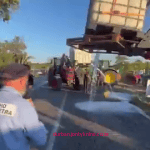
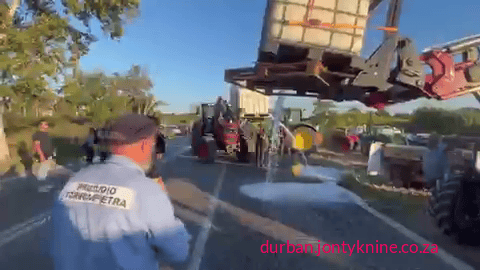
Farmers used tractor-mounted loaders to hoist large intermediate bulk containers (IBCs) of milk—often described in reports as diluted (“annacquato”) or unsold—and pour it onto the asphalt as a dramatic, symbolic gesture. Tractors lined the road, people gathered, and the action partially occupied lanes, causing traffic slowdowns and queues while police managed flow (typically keeping one direction open or alternating). The scene matches reports of the September 30, 2026, evening action that began around 18:00, involving roughly 20–25 tractors and 100–200 participants from areas including Fiumicino, Cerveteri, Ladispoli, and further afield.
Why the milk dumping and road actions?
Farmers stated they cannot cover production costs and “make ends meet.” Core drivers included:
- Sharp rises in diesel and fuel prices for agricultural use (reports cited agricultural diesel around €1.70 per litre or increases from roughly €0.85 to €1.62+ per litre in recent months, tied to geopolitical tensions and supply disruptions, including Middle East-related pressures). Fuel is essential for tractors, irrigation, transport, and fieldwork; one illustration noted hundreds of euros extra just to work an average-sized plot.
- Broader input cost inflation: feed, fertilizers, and other inputs had risen sharply (examples from related Sardinian shepherd protests noted feed roughly doubling and fertilizers more than tripling compared with earlier years).
- Low or unsustainable farm-gate prices for output. Wheat was cited at levels like €25 per 100 kg (or ~€0.20/kg) while retail bread prices were far higher; milk was described as effectively undervalued or hard to sell profitably at the stall. The dumping visually conveyed that the product’s value to the producer had been driven toward zero relative to costs.
- Cumulative pressure: Many described this as the “third year” of protests or the latest blow to a sector already squeezed by bureaucracy, competition (including imports with different standards), climate challenges, and thin margins. Some warned of farm closures and generational exit from the land.
The action was not isolated. A permanent sit-in with tractors and trucks had been underway at Torrimpietra since about September 25. Similar or parallel mobilizations occurred in other regions (Calabria highway approaches, Sicily road blocks, Sardinia shepherd meetings over sheep’s milk prices described as worse than the 2019 “milk war”). Truck drivers (autotrasportatori) and fishermen were also mobilizing over the same fuel-cost crisis, with planned or ongoing stops, port-related actions, and calls for government intervention on diesel prices, modal-shift incentives, and operating losses. Citizens and families affected by the broader cost-of-living squeeze joined some gatherings. Organizers spoke of coordinating toward larger Rome actions (references to possible dates around mid-to-late October).
Symbolism, tactics, and immediate effects
Pouring milk (and in some accounts dumping grain) is a classic protest tactic in European agriculture—visible, emotionally charged, and aimed at media attention and public sympathy. It underscores waste born of market failure rather than abundance: producers destroy or discard product they cannot profitably sell while consumers face high retail prices. In the video frames, the white liquid spreads across the roadway under the lifted tanks as people watch, film, and gesture; tractors and other vehicles form a backdrop; a man in a “PRENDIO TORRIMPIETRA”-style jacket is visible in the foreground in early frames.
Traffic impacts were real but managed: one carriageway occupied, the other kept partially clear, with police, carabinieri, and local forces present. Long queues formed on the Aurelia (a key coastal/northern access route to Rome), affecting commuters and locals. Smoke bombs or flares appeared in some coverage. The protest remained largely non-violent in the reported accounts of this specific action.
Wider context and implications
This fits a recurring European pattern of farmer discontent (seen in multiple countries in recent years) over energy costs, EU agricultural and environmental rules, supply-chain power imbalances (retail and processors capturing most of the final price), and import competition. In Italy it also echoes earlier milk protests (notably Sardinia 2019). Geopolitical energy shocks amplified structural vulnerabilities: Italian agriculture is diverse and quality-oriented (“Made in Italy”) but many farms are small or medium-sized family operations with limited buffers against input spikes.
Implications include:
- Economic: Risk of reduced domestic output, higher food prices passed to consumers, rural economic decline, and pressure on related sectors (transport, processing, fisheries).
- Political: Pressure on the Meloni government for more decisive fuel relief, fair-price mechanisms, reduced bureaucracy/taxes, and stronger defense of the sector in EU negotiations (including CAP funding). Some temporary industry responses appeared (e.g., Eni/Enilive price caps or discounts extended to agricultural diesel). Opposition figures criticized the government for insufficient action; government-aligned voices pointed to existing support measures (fertilizer aid, CAP advocacy). Cross-sector solidarity (farmers + hauliers + citizens) raises the stakes.
- Social and environmental nuances: The dumping is wasteful of a perishable resource and creates a roadside mess, yet participants framed it as the only remaining way to make the crisis visible after years of warnings. It highlights how energy dependence and global price volatility hit primary producers first and hardest. Some milk was reportedly diluted, so the volume of pure saleable product destroyed may have been lower than the visual impact suggested.
- Edge cases and longer view: Not every region or farm faces identical conditions (dairy vs. arable, north vs. south, scale differences). Success of protests often depends on sustained coordination and whether temporary discounts become structural fixes. Historical precedents show temporary relief is common, but durable fair-pricing or cost-offset mechanisms are harder.
In short, the video documents a pointed, visually striking expression of economic distress in Italian agriculture and allied sectors in autumn 2026. Fuel-price spikes acted as the immediate catalyst on top of longer-term margin compression. The blocking of roads and dumping of milk aimed to force visibility and political response amid a cost-of-living climate that also touches ordinary consumers. Whether the actions produce lasting policy changes depends on follow-through from organizers, government, energy companies, and EU-level decisions.