
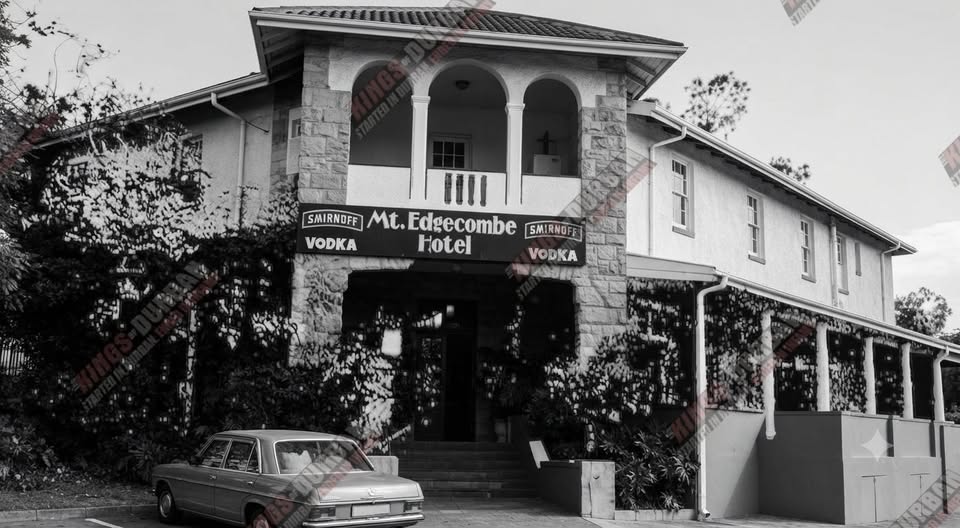
There is no well-documented standalone historic hotel specifically named “Mount Edgecombe Hotel” in Durban/KwaZulu-Natal with a long independent history comparable to coastal landmarks like the Oyster Box or older Durban beachfront hotels. References to accommodation in the area primarily involve modern boutique lodges within the Mount Edgecombe Country Club Estate (such as Fairways Lodge and Mount Edgecombe Estate Lodge/Golf Lodge). The query most likely concerns the broader history of the Mount Edgecombe place/estate itself, which transformed from a 19th-century sugar plantation into a premier gated golf and residential lifestyle estate north of Durban.
Origins as a Sugar Estate (1850s–early 1900s)
Mount Edgecombe (sometimes spelled Mt Edgecombe) takes its name from Mount Edgcumbe House in Cornwall, England, the seat of the Earls of Mount Edgcumbe (references vary slightly on the exact earl or titleholder, often citing the 7th Earl or related figures such as Edward Piers Edgecumbe or Sir Richard Piers Edgecombe).
British settler Captain William Smerdon (also referred to as William Henry Smerdon or similar variants; some sources note William Sherwood in related temple histories) arrived under emigration schemes (Byrne or Burn) around 1852. He established the estate and built the Mount Edgecombe Sugar Mill in 1859 (some accounts link earlier activity to the broader Natal sugar industry’s start under figures like Edmund Morewood). This made it one of KwaZulu-Natal’s early and important sugar estates.
The growth of the industry relied heavily on Indian indentured labourers, who began arriving in Natal in 1860 (the first ship, SS Truro). On 4 March 1862, Smerdon recruited the Abraham family (among the earliest arrivals, initially allocated elsewhere) as domestic servants; he later expanded recruitment for field work (e.g., 41 labourers around 1864). These workers, along with Black migrant labourers, Mauritian skilled workers, and others, formed the backbone of the estate. The community developed temples, schools, and social structures amid the hardships of indenture and plantation life. The Shree Emperumal Temple (founded 1875 as a simple structure and later rebuilt/expanded, notably in the 1920s by artisan Kistappa Reddy) remains a key cultural landmark tied to this history.
Ownership changed hands multiple times: sold to Mauritian Jules Langlois around 1866–1876 (accounts differ slightly on exact years); later to Natal Central Sugar Company (under Alfred Dumat); and in 1895 acquired/rescued by industrialist Marshall (or Marshal) Campbell (with associate David Don), who formed Natal Estates Ltd. Under Campbell and later his son William, the estate expanded by acquiring neighbouring farms and became a major sugar powerhouse. It eventually became part of Tongaat Hulett (merger involving Huletts and Tongaat interests, with the mill incorporated around 1963). The mill closed and was demolished in 1994 amid urbanisation, declining sugar profitability, and the rise of property development.
Transition to Recreation and Golf (1920s–1980s)
By the 1920s–1930s, the long, difficult journey into Durban for leisure prompted sugar estate workers and managers to create local recreation. A nine-hole golf course was laid out around 1924 by enthusiasts (associated with Natal Estates Sports Club or Huletts). It was extended to 18 holes in 1935–36, designed by South African golfing great Sid Brews, becoming known as Course One (later “The Woods”). Membership later expanded to include “town members,” and a new clubhouse was built. Golf and sports (including football teams from the 1920s–1930s onward) formed part of company-town incentives and community life.
The course and clubhouse suffered major setbacks: flooding in 1987 and a fire that destroyed the clubhouse in under an hour in 1988. These events marked a turning point that led to the modern Mount Edgecombe Country Club.