


Continuity of asylum accommodation policy
Labour inherited a backlog of asylum claims and a system heavily reliant on private hotels and other contingency sites. Despite campaign rhetoric about ending hotel use “as quickly as possible,” the government has continued the practice because of legal obligations under the 1951 Refugee Convention, the Human Rights Act, and domestic asylum law, combined with limited alternative housing stock and ongoing arrivals via small boats and other routes. Official statistics and parliamentary statements through 2025–2026 show that hotel and contingency accommodation numbers have remained high in many local authority areas (especially coastal and urban centres in England), with some dispersal to Scotland, Wales and Northern Ireland. Critics on the right argue this represents continuity rather than rupture; supporters of the government point to parallel efforts on returns agreements, processing acceleration and long-term housing plans that have not yet fully displaced the temporary estate.
Protests and local impact
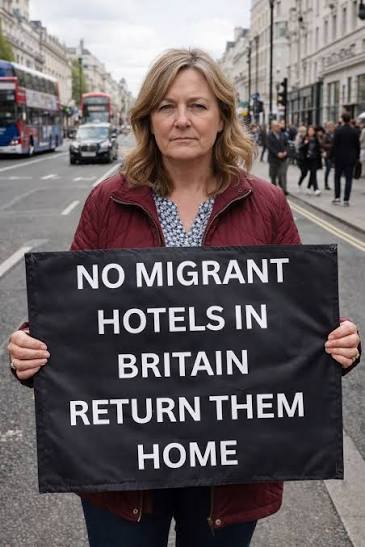
Protests against asylum hotels and related sites have grown in frequency and visibility since 2024. Demonstrations have occurred outside specific hotels and facilities in multiple towns and cities, often organised by local residents, anti-immigration groups and, in some cases, far-right networks. Motivations cited by participants include pressure on local services, crime concerns linked to a minority of residents, cultural friction, and the cost to taxpayers. Counter-protests and community solidarity actions have also taken place. Media and police reporting document both peaceful marches and incidents of disorder, property damage, and clashes. Local councils and MPs from both major parties have repeatedly described the strain on housing, NHS capacity and social cohesion in affected areas.
Free-speech and policing concerns
Policing of these protests, and of related online and offline speech, has become a flashpoint. Forces have used public-order powers, conditions under the Public Order Act, and (in some cases) hate-crime or communications legislation. High-profile arrests, charges and social-media monitoring have prompted criticism from free-speech advocates, some Conservative and Reform UK figures, and civil-liberties organisations who argue that the threshold for intervention has been applied unevenly—more readily against anti-asylum demonstrators or online critics than against other forms of protest. Police and government statements emphasise the need to prevent disorder, protect vulnerable people (including asylum seekers), and uphold the law against incitement or harassment. Independent reviews and parliamentary select-committee evidence have highlighted inconsistencies in guidance, training and operational decisions across forces. Concerns also extend to the broader chilling effect on discussion of immigration numbers, integration outcomes and policy trade-offs.
Broader context and competing perspectives
- Government/Labour position: Legal and moral duty to accommodate people while claims are processed; focus on speeding decisions, increasing returns, and reducing hotel dependency through longer-term contracts and new facilities. Protests are framed as legitimate when peaceful but unacceptable when they intimidate or tip into violence; policing is presented as operationally independent.
- Opposition and critical voices: Continuity of high accommodation numbers and visible hotels is seen as evidence of insufficient control of borders and insufficient prioritisation of British citizens’ housing and services. Heavy policing of protests is cited as selective enforcement that privileges one set of sensitivities over another.
- Data points that cut across partisan lines: Asylum grant rates, small-boat arrivals, hotel costs (hundreds of millions of pounds annually), local-authority funding shortfalls, and recorded crime statistics involving foreign nationals remain subjects of official statistics and independent analysis. Integration outcomes, language acquisition, employment rates and community-cohesion surveys show variation by nationality, length of stay and local context.
- International and legal constraints: UK obligations under international law, the European Convention on Human Rights (still domesticated via the Human Rights Act), and domestic judicial review limit unilateral options. Negotiations with France, Albania and other countries on returns and upstream prevention continue, with mixed results.
The situation remains fluid: accommodation contracts are periodically renewed or shifted, protest activity fluctuates with media coverage and specific incidents, and parliamentary and judicial scrutiny of both policy and policing continues. Accurate assessment requires distinguishing between the legal duty to house people whose claims are pending, the practical capacity and cost of doing so, the right to peaceful protest, and the state’s duty to maintain public order without viewpoint discrimination. Primary sources—Home Office statistics, National Audit Office reports, Hansard, police force data and independent inspectorate findings—provide the most reliable baseline against which claims from all sides can be tested.