





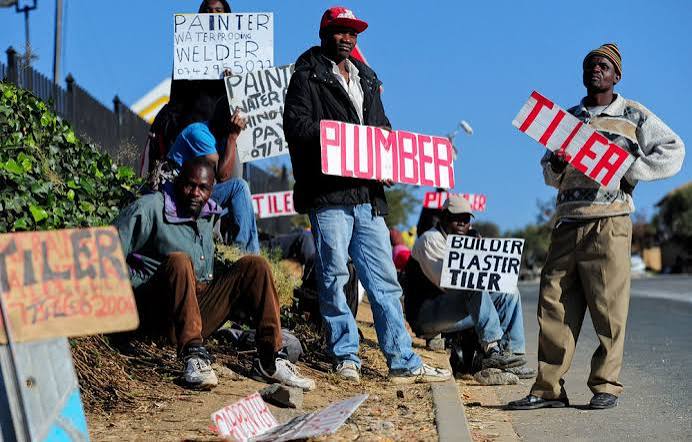
South Africa has ramped up action against undocumented migrants. Officials have cited tens of thousands of deportations (for example, around 51,000 in one reported year period, with further large numbers in 2026 months, plus voluntary departures and pressure-driven exits that some reports put in the hundreds of thousands cumulatively). Home Affairs and other ministers have explicitly linked stronger border control, workplace raids, and penalties for employers hiring undocumented workers to protecting scarce jobs for South Africans and curbing exploitation (below-minimum wages, poor conditions, and workers who cannot easily complain). Joint operations involving Home Affairs, labour inspectors, and police have targeted sectors such as construction, agriculture, hospitality, retail, and informal activities. New policy directions include higher fines, potential quotas for documented foreign workers in certain sectors, and more inspectors.
Public frustration is real and understandable. Official unemployment has hovered around 32–33% (with expanded measures that include discouraged workers exceeding 40%, and youth rates often above 60%). Millions of working-age South Africans are without jobs, and competition is fiercest in low-wage, informal, or precarious work. Some employers prefer undocumented workers precisely because their status makes them cheaper and more compliant. Government statements frame enforcement as both a rule-of-law issue and a labour-market measure.
What the labour market data actually shows
Unemployment has not fallen with the crackdown and migrant outflows. Stats SA figures for early-to-mid 2026 show job losses in some quarters (hundreds of thousands), rises in the official unemployment rate, and continued deterioration for youth. Reports from the period of intensified pressure and departures note that the overall jobs picture worsened rather than improved.
Foreign-born workers (documented and undocumented) are a relatively small share of formal employment—around 3–4% in recent tax-data analyses—and a higher but still minority share in the informal economy (roughly 15–20% in some estimates). Even under the strong assumption that every job held by a foreign-born worker could be instantly transferred to an unemployed South African, the impact on the expanded unemployment rate would be modest (on the order of several percentage points, not a transformation of the crisis).
Research and fact-checks consistently find that migration is not the main driver of South Africa’s unemployment. Broader factors dominate: chronically weak economic growth, skills and education mismatches, infrastructure and electricity constraints, low investment, rigidities in the formal labour market, and high numbers of new entrants into the working-age population. Immigrants are often concentrated in sectors or roles where locals are less willing to work at the prevailing wages and conditions (or where enforcement of minimum wages and labour standards is weak). Some studies have found that immigration can be associated with net job creation through entrepreneurship, demand effects, and complementary labour; others note potential displacement or wage pressure in specific low-skill niches. A simple “remove the foreigners → jobs appear for locals” model does not hold at scale.
Sectoral and practical effects of the recent outflows
There are mixed, often localised reports:
- Some farms, construction sites, and informal businesses have seen vacancies after migrants left or were removed. A few accounts claim South Africans filled certain roles.
- Other reports describe labour shortages, higher costs, disruptions in agriculture, transport, small retail/spaza trade, and services, and businesses struggling to replace experienced or willing workers. Employers sometimes used the climate to dismiss workers; in other cases, the work simply becomes harder or more expensive to staff.
Migrants also participate as entrepreneurs and consumers. Removing large numbers of them can shrink local economic activity in townships and informal markets even as it frees some individual positions. Historical and modelling work on immigration restrictions produces varied results depending on assumptions about wage flexibility, capital substitution, and skill complementarity; recent real-world outcomes in South Africa have not produced a clear employment boom for citizens.
Nuances and trade-offs
Enforcement against illegal presence and illegal employment is a legitimate state function. Rule of law, fair competition, and protection against exploitation matter. Undocumented status can enable undercutting of labour standards, which harms both migrant and local low-wage workers. Prioritising South Africans for available jobs (via recruitment systems and employer compliance) is a common policy stance in many countries facing high unemployment.
However, treating deportation as a primary jobs strategy overstates its power. Structural unemployment of this magnitude requires faster growth, better education and training, investment climate improvements, infrastructure reliability, and labour-market reforms that expand the total number of productive jobs. Blaming migration for the bulk of the problem distracts from those harder tasks. Hostility and violence against migrants (including documented ones and their businesses) also carries economic and social costs—reduced confidence, higher risk perceptions, and potential damage to regional trade and investment links.
In short: intensified deportations and pressure have occurred alongside continued or worsening high unemployment. There is little evidence of broad improvement in job opportunities for South Africans attributable to the removals. Localised shifts happen, enforcement addresses real legal and exploitation issues, but the scale and nature of South Africa’s employment crisis are driven primarily by deeper economic and structural factors.