




H5 bird flu has spread across Australian states in wild birds (especially seabirds like terns). It poses a major risk to dense penguin colonies because the birds live closely together. Models have warned of potentially high mortality (e.g., thousands of deaths in a major colony) if it takes hold.
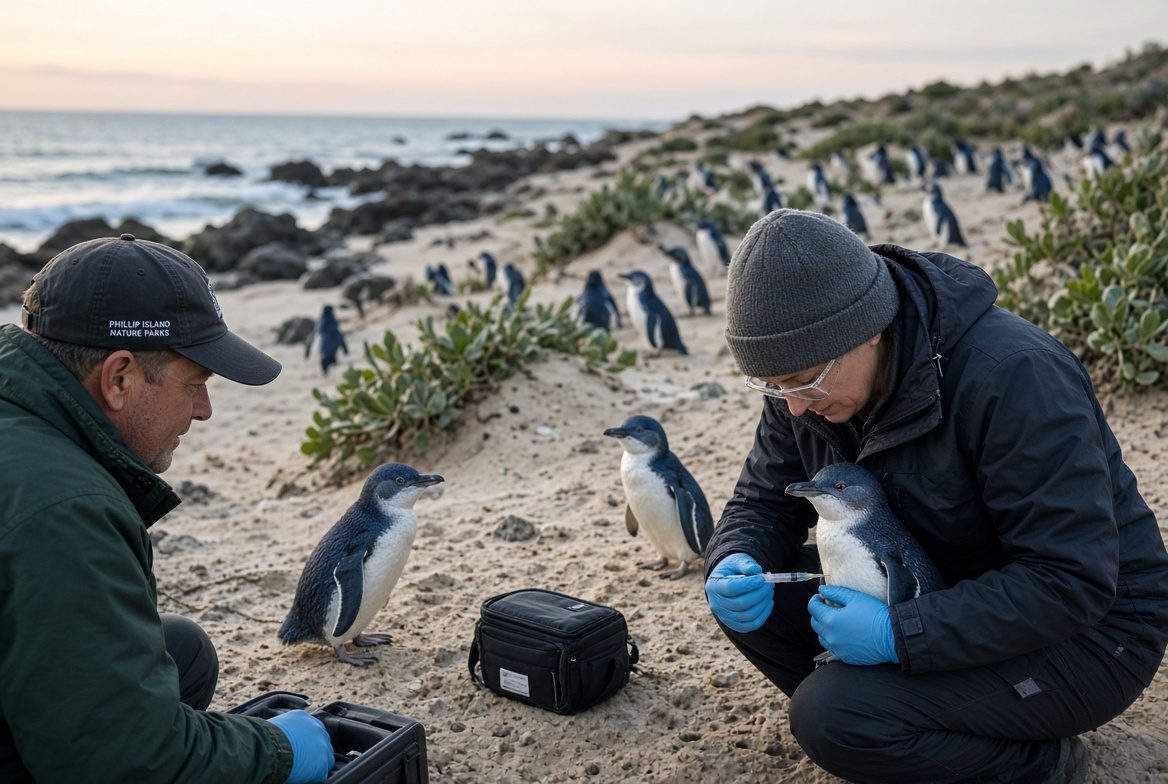
- Victoria announced a large-scale vaccination program for up to ~5,000 little penguins (out of a state population of roughly 37,000–40,000 on Phillip Island alone, the world’s biggest colony of the species). Each bird needs two doses and is microchipped for tracking. This is described as one of the largest wild-bird vaccination efforts of its kind. bloomberg.com
- The program started around the same time the first little penguin death from H5 was confirmed on Phillip Island (mid-August 2026). Officials accelerated the rollout in response. theguardian.com
- The goal is to reduce the impact of the virus (it won’t fully stop transmission), protect a key tourism attraction (the Penguin Parade), and help conserve the population. Similar protective vaccination has been discussed or trialed for other at-risk native birds. theconversation.com
Related evidence on vaccine safety:
- A peer-reviewed trial of an H5 vaccine in wild king penguin chicks (published earlier in 2026) showed a strong, persistent immune response with no adverse effects observed. nature.com
- Australian trials and observations on little penguins and other species have similarly indicated the vaccine is safe, with vaccinated birds developing an immune response and no reported health impacts from the shots themselves. 7news.com.au
The vaccines are a targeted conservation and biosecurity tool amid a genuine outbreak that has already killed wild birds in Australia and devastated seabird/marine mammal populations elsewhere in the world. Claims that the vaccines are “killing” the penguins reverse the actual situation: the virus is the threat, and vaccination is the attempted protection.