


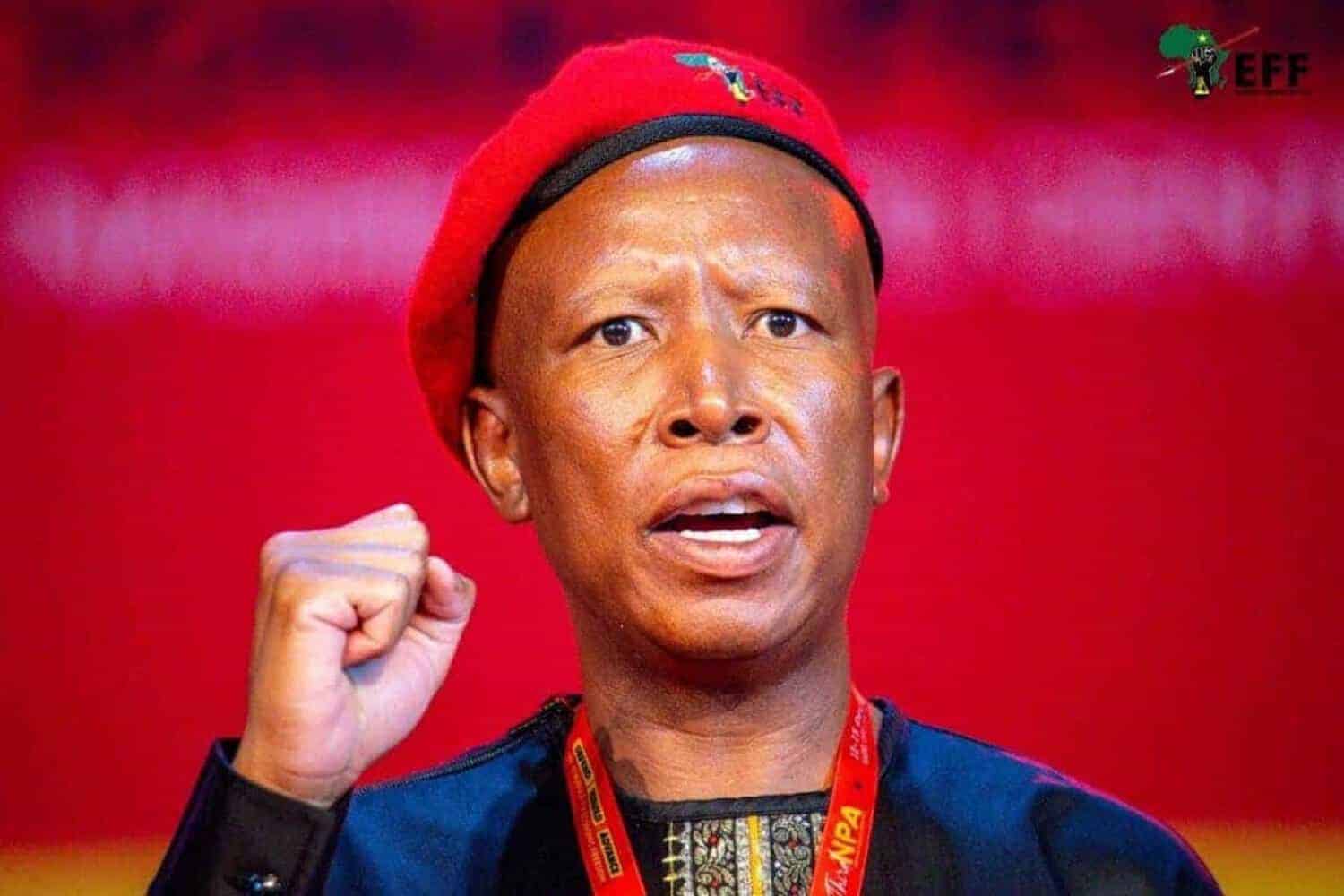
He explicitly rejected the idea of “no-go areas” for his party in the province, framing KZN as a space the EFF must contest fully despite its challenging political landscape.
Key statements from Malema
He declared that the EFF must establish a presence “everywhere in the backyard, if not the yard of President Zuma,” and that “there should never be a place in KZN where there is no EFF.” He insisted no politician or activist could prevent the party from campaigning there:
“There is no one that will stop me here, not even the IFP can stop me… I can never be intimidated by small boys and small girls. If they want to know who I am, they must ask Donald Trump.”
He added that the EFF “is not going anywhere. It is going to stay here in KZN, whether they like it or not,” positioning the party as a defender of the poor, unemployed youth, underpaid petrol attendants, harassed domestic workers, and farm workers without rights. He urged supporters not to fear the IFP (which has deep historical roots in parts of the province), the ANC, or the MK Party, warning that fear would lead to intimidation and stolen votes. He emphasised that no one has a “monopoly of violence” and that ideas outlive individuals even if people are killed.
Malema also criticised service delivery failures in municipalities such as Msunduzi, describing parts of the city centre as looking uninhabited and questioning leadership competence. He called for ground-level mobilisation, recruitment, and active structures in towns, townships, and rural areas to rebuild the EFF’s base.
Broader context
KwaZulu-Natal has long been a competitive and sometimes volatile political arena, with strongholds historically linked to the IFP, ANC, and more recently the MK Party associated with former president Jacob Zuma. “No-go area” rhetoric has appeared periodically: earlier in 2026, figures such as Ngizwe Mchunu publicly declared Malema “not welcome” in the province (citing alleged disrespect toward Zulu leaders, police commissioner Nhlanhla Mkhwanazi, and others), prompting strong EFF pushback that no individual can unilaterally declare such zones in a democracy. Older instances include tensions with the ANC Youth League around 2014 and claims that the province was once viewed as hostile terrain for the EFF.
Malema’s remarks fit a pattern of assertive campaigning aimed at expanding the EFF’s footprint in a province where it has historically underperformed relative to its national profile. They also serve internal mobilisation purposes, encouraging activists amid preparations for the November municipal polls. The IFP reference underscores ongoing rivalry with traditional KZN power bases, while the Zuma mention reflects the complex, overlapping support bases involving MK.
These statements occur against a backdrop of South Africa’s multiparty competition, service-delivery challenges in many municipalities, and occasional flare-ups of political intolerance. Malema’s framing stresses democratic openness and grassroots organising while projecting defiance toward perceived gatekeeping by rivals. Coverage has appeared in outlets such as The Citizen and The Witness, with EFF structures amplifying the “KwaZulu-Natal will never be a No Go Area for the EFF” message on social media.
In short, Malema used the platform to reject exclusionary claims over KZN political space, rally his base for intensive campaigning, and reaffirm the EFF’s claim as a vehicle for the excluded ahead of the local elections.