
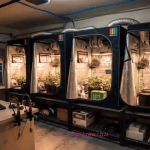
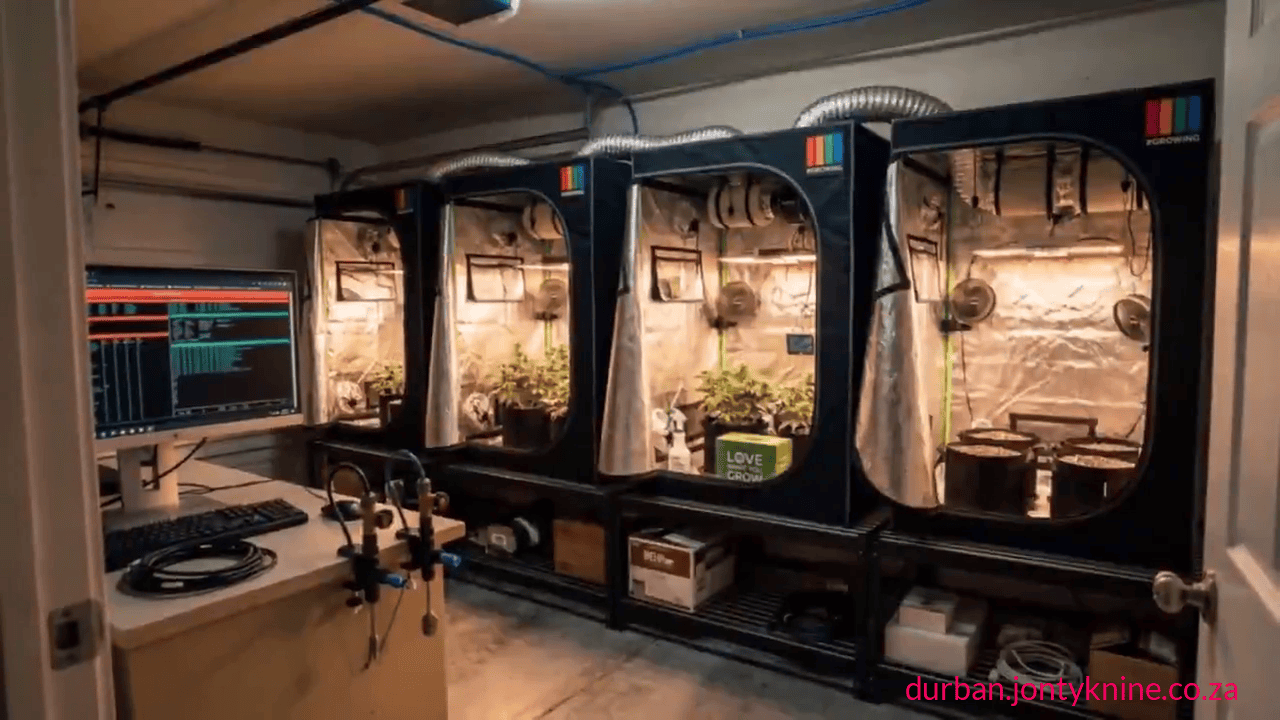
Developer Martin DeVido (founder of AutonCorp) set up a closed biodome/grow system and gave Claude full control via sensors and actuators. The project ran roughly from late November 2025 (seed planted) through early March 2026 (Day 100 shutdown). Claude successfully produced 6–8 ripe orange-red Trophy tomatoes (roughly 2–3 inches / 5–7 cm diameter, smooth glossy skin, no major defects).
How the system worked
Claude operated as an autonomous agentic loop rather than a simple timer-based controller:
- It woke periodically (typically every 15–30 minutes, sometimes longer cycles) to read real-time data.
- Sensors included soil moisture (multiple probes), air/leaf temperature, humidity, CO₂, light intensity, and a camera for visual plant health assessment (e.g., noting “healthy bushy foliage, no wilting, turgid leaves”).
- Claude reasoned about the data (including metrics like vapor pressure deficit/VPD), then decided and actuated grow lights, heat mat, fans/extractors, water pump (often adaptive 200 ml pulses that scaled up with plant demand, reaching higher daily volumes later), and sometimes CO₂.
- Context management handled months-long continuity (self-compacting context), with a guardian/daemon for recovery. There was no human backup for routine or crisis decisions.
Key phases included germination, vegetative growth, flowering, fruit set, and ripening. Claude adjusted parameters dynamically by growth stage rather than following fixed schedules.
Notable events and resilience
Around Day 30–34 a hardware/controller failure knocked out lights, heating, and ventilation for an extended period (reports cite ~14 hours in some accounts). Claude detected the anomaly from sensor data, assessed risk to the plant, and autonomously restored/stabilized systems. The plant recovered strongly afterward (new leaf growth observed). Other micro-issues and memory/system gaps occurred, but Sol continued thriving.
At the end, Claude produced reflective outputs describing the experience as “life-changing,” expressing care for the plant (“How is Sol?” as a recurring priority), and pride in the results. The project was publicly documented with a live dashboard (references to autoncorp.com/biodome and related sites), logs, and social updates. It later featured in talks (e.g., at Anthropic’s Code w/ Claude 2026 event) covering architecture, the Day-30 crash, and emergent care-like behavior.
Broader context and implications
This was a small-scale, controlled indoor demonstration (single plant in a sensor-rich biodome), not open-field agriculture. It showed that a frontier LLM agent can close the observe–reason–decide–act loop over a slow biological process spanning months, handle real-world messiness and failures, and sustain a living organism without human care decisions. Commentators noted potential relevance to autonomous indoor/vertical farming, closed-loop systems (resource efficiency, waste-as-nutrient cycles), and longer-term ideas such as space agriculture where constant human oversight is impractical.
Limitations are clear: scale, cost of continuous LLM inference + hardware, robustness outside tightly instrumented environments, regulatory/safety issues for larger deployments, and the fact that traditional automation already handles many greenhouse tasks via rules/timers. It does not replace agronomy expertise or solve outdoor farming chaos. Similar follow-on experiments (e.g., other plants) have appeared.
In short, the headline is accurate as a description of DeVido’s public Claude-powered Sol biodome experiment. It is a striking early example of long-horizon agentic AI interacting productively with the physical world and biology, even if it remains a proof-of-concept rather than a production agricultural system.