





Zimbabwe’s compensation payments
In early October 2026, Zimbabwean Deputy Finance Minister Kudakwashe Mnangagwa stated that total compensation paid to white farmers whose farms were seized had reached $508 million. This comprised cash payments of about $12.6 million (roughly R209 million) plus the balance delivered via dollar-denominated bonds after farmers accepted and subscribed to them.
This forms part of a broader 2020 Global Compensation Deed (later adjusted) under which the Zimbabwean government committed to pay approximately $3.5 billion in total for improvements on compulsorily acquired land (not the underlying land value itself). Payments are being made in batches; earlier updates noted hundreds of claimants receiving mixes of cash and bonds. The process aims to help Zimbabwe restore credibility with international capital markets after years of isolation linked to the seizures and subsequent sanctions.
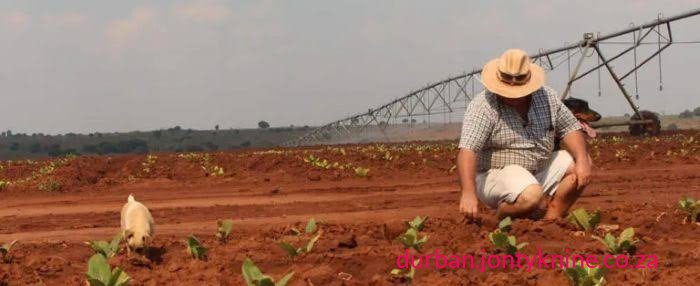
Historical context: From 2000, then-President Robert Mugabe’s government encouraged occupations of white-owned commercial farms by black subsistence farmers, war veterans and youths, framing it as redress for colonial-era land dispossession. Roughly 4,000 white farmers were forced off their land; a number of farmers and hundreds of their workers were killed amid the violence and disruption. Agricultural output (especially tobacco, maize and other commercial crops) collapsed sharply in subsequent years, contributing to hyperinflation, economic contraction, food insecurity and mass emigration. Zimbabwe later shifted toward compensating for improvements as part of efforts to normalise relations and attract investment. Not all farmers accepted the revised bond-heavy terms, and the full $3.5 billion remains a long-term commitment relative to Zimbabwe’s constrained fiscal capacity.
These payments represent a partial, ongoing effort to address the legal and reputational fallout of the seizures rather than a full market-value restitution for land itself.
Necsa’s R7.3 million loss
Separately, the South African Nuclear Energy Corporation (Necsa), a state-owned entity focused on nuclear technology, research, medical isotopes and related commercial activities, reported a R7.3 million group loss for the 2026 financial year. This marked a sharp reversal from a R125 million profit the prior year and its first loss since 2022.
The loss was driven primarily by commercial subsidiaries:
- NTP (medical isotopes) recorded a R75.7 million loss, hit by US tariffs that reduced access to a key historical market, plus the shutdown of the SAFARI-1 research reactor.
- Pelchem (fluorochemicals) also underperformed and may require further restructuring.
Necsa chairperson David Nicholls told Parliament’s Portfolio Committee on Electricity and Energy that the SAFARI-1 reactor was offline (pending National Nuclear Regulator approval related to spent-fuel storage), with every week of downtime costing roughly R25 million. Leadership (including CEO Loyiso Tyabashe) stated that a prior turnaround had been completed and that the focus was shifting to growth via product, customer and geographic diversification (including efforts to expand into Asia, subject to non-proliferation clearances).
Necsa’s mandate includes applied nuclear R&D, commercial applications and contributions to national energy and medical needs. Like many South African state-owned enterprises, it has faced governance, operational and market challenges over time, though its recent scale of loss (R7.3 million) is modest relative to larger SOEs such as Transnet or historical Eskom figures.
Putting the figures in perspective
The juxtaposition highlights different scales and contexts. Zimbabwe’s cumulative compensation outlay of ~R8.45 billion so far is part of a multi-year, multi-billion-dollar commitment aimed at closing a chapter on land seizures that severely damaged its commercial agricultural sector and international standing. Necsa’s single-year R7.3 million loss, while a setback after recent profitability, occurs against a backdrop of South African SOE performance that has seen some improvement in aggregate profitability in recent reporting periods (driven by entities such as Eskom), though persistent issues of governance, operational reliability and fiscal support remain widespread across the SOE sector.
Land reform debates in the region often contrast Zimbabwe’s disruptive fast-track approach (with its high human, economic and institutional costs) against South Africa’s slower, constitutionally constrained processes that emphasise legal frameworks, compensation principles and various equity or redistribution schemes—some of which have themselves faced criticism for limited benefits to intended farmworker beneficiaries or allegations of mismanagement. Zimbabwe’s payments illustrate both the long-term fiscal burden of reversing (or mitigating) earlier policy choices and the political signalling involved in seeking reintegration into global finance. Necsa’s result is a narrower operational and market story involving a specialised SOE dealing with reactor downtime, trade barriers and commercial pressures.