




Key poll findings for eThekwini
Ipsos (via its Pulse of the People / Khayabus survey of about 3,600 face-to-face interviews nationally) found:
- MK Party: 55%
- DA: 17%
- ANC: 10%
- IFP: 6%
- ActionSA: around 4%
- EFF: around 3%
- Smaller parties / others: roughly 5%
This would represent a dramatic shift if reflected in the actual vote. The ANC has governed eThekwini (Durban metro) since 1996 and won about 42% there in the 2021 local elections; MK only contested national/provincial elections for the first time in 2024 (taking roughly 45% in KwaZulu-Natal province overall). Ipsos noted MK remains “largely a KwaZulu-Natal phenomenon,” with much weaker support outside the province.
Ipsos political analyst Mari Harris highlighted that only MK currently shows a strong dominant position in any major metro, while most others (Johannesburg, Ekurhuleni, Tshwane, Nelson Mandela Bay, Buffalo City) look headed for tight races or coalitions. The firm explicitly cautioned that these figures are not a prediction of the final outcome — campaigning was still ongoing, turnout will matter, and margins of error apply (notably higher for smaller metro samples).
Context and caveats
- Timing and methodology: Fieldwork ran June–July 2026. Results reflect those who chose a party on an electronic ballot among registered voters; a significant share (often 20%+) indicated they might not vote, which could shift outcomes if mobilization differs by party.
- Other polls differ: A Social Research Foundation / related poll from around August put MK lower (around 33% in eThekwini), with DA ~23%, ANC ~18%, and IFP ~16%. Both still show MK leading, but the gap varies.
- Political reactions:
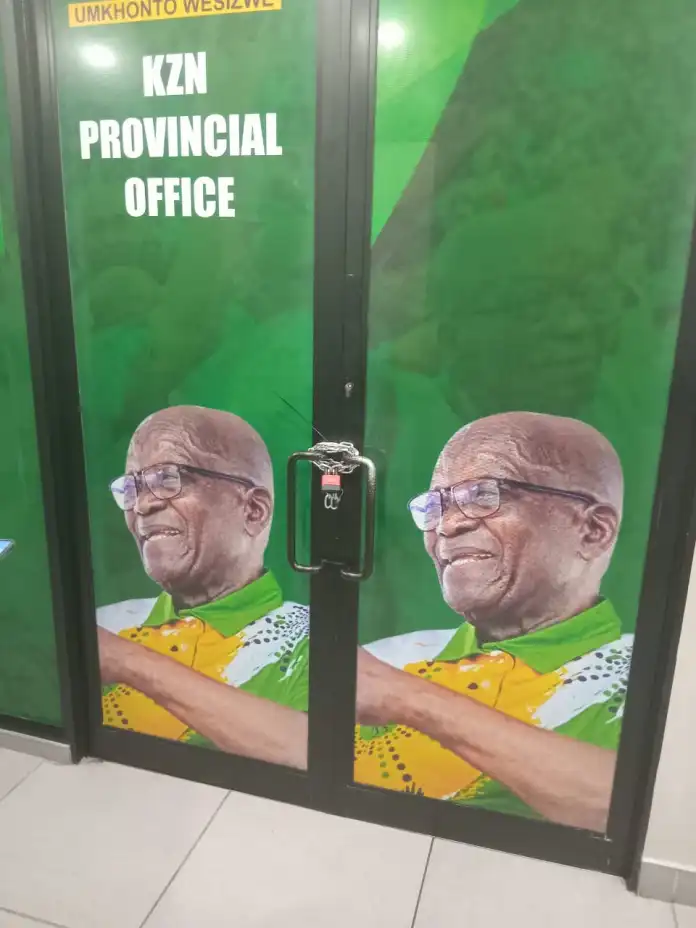
- MK has expressed confidence, with national chairperson Mxolisi (Apostle) Phakathi as mayoral candidate (after an earlier change from Zandile Hlophe-Mkhwanazi amid internal candidate-list disputes). Party spokespeople have said indicators point to taking the metro.
- The ANC has dismissed the Ipsos numbers, insisting it will retain eThekwini by focusing on its own campaign and the electorate rather than surveys.
- The DA has framed the contest as effectively a two-horse race between itself and MK for the mayoralty, while drawing a hard line against any coalition with MK. Other parties in the existing provincial Government of Provincial Unity arrangements have signalled interest in keeping MK out of power where possible.
- Broader metro picture from the same Ipsos work: ANC and DA are close in several key places (ANC slight edge in Johannesburg in some readings; DA ahead in Tshwane; tight or tied contests elsewhere). DA strong in Cape Town (~46%). National voting intention in the poll was roughly ANC 31%, DA 25%, MK 14%, EFF 11%.
eThekwini is strategically important as KwaZulu-Natal’s economic hub with a large budget. An MK majority (or strong plurality forcing coalitions) would mark a major change in local governance after decades of ANC dominance, though post-election negotiations, turnout, and any further shifts in voter intention before 4 November remain key variables. Polls provide snapshots, not guarantees.