



This exchange forms part of a broader, high-stakes political contest over service delivery in Durban ahead of the 4 November 2026 local government elections. Water supply failures—characterised by high non-revenue water (NRW) losses, thousands of unrepaired leaks, prolonged outages, and heavy reliance on tankers—have become a central campaign issue.
Context of the Final Council Meeting and DA Actions
The final full council meeting of the term took place in the lead-up to early October 2026. The DA, led in eThekwini by mayoral candidate Haniff Hoosen and KZN leader Sithembiso Ngema, used the occasion to highlight what it describes as systemic failure under ANC-led governance. The party organised a demonstration outside Durban City Hall and had earlier unveiled a controversial billboard campaign featuring images of Xaba, City Manager Musa Mbhele, and Water and Sanitation Executive Director Ednick Msweli alongside the slogan “You can stop the water tanker mafia. Vote DA for water in your taps.”
City officials viewed the billboard as defamatory, arguing it crossed from legitimate political criticism into implying criminal conduct. Lawyers issued demands for its removal and an apology; the billboard was subsequently taken down (the DA maintains it did not consent, while the advertising company cited commercial and neutrality considerations). Xaba addressed the controversy at a post-council media briefing, stating that robust debate is acceptable but officials should not be labelled criminals while performing their duties.
The DA’s critique centres on quantifiable failures: more than 13,000 active water leaks at any given time; NRW losses reported at or above 65% (up from roughly 49–58% earlier in the term or under previous turnaround strategies); monthly losses estimated at around 21 billion litres; and a sharp rise in tanker expenditure (from about R102 million to over R800 million in recent years). The party has formally called for Msweli’s suspension, arguing that a 2023 water turnaround strategy failed to reverse deterioration and that accountability is lacking. It has also floated a 10-point recovery plan involving large-scale pipe replacement investment (figures cited in the R7–10 billion range), ring-fencing of water revenue, performance targets with consequences, rapid-response teams, technology for leak detection, and private-sector involvement.
Xaba’s Defence and Reported Investments
At the media briefing following the final council meeting, Xaba framed the water challenges as long-standing and complex while highlighting measurable progress and capital commitments. Key elements of the city’s reported response include:
- Overall investment scale: Close to R3 billion spent in recent years on stabilising water and sanitation infrastructure (maintenance, new works, leak repairs, and tankers), separate from major bulk projects.
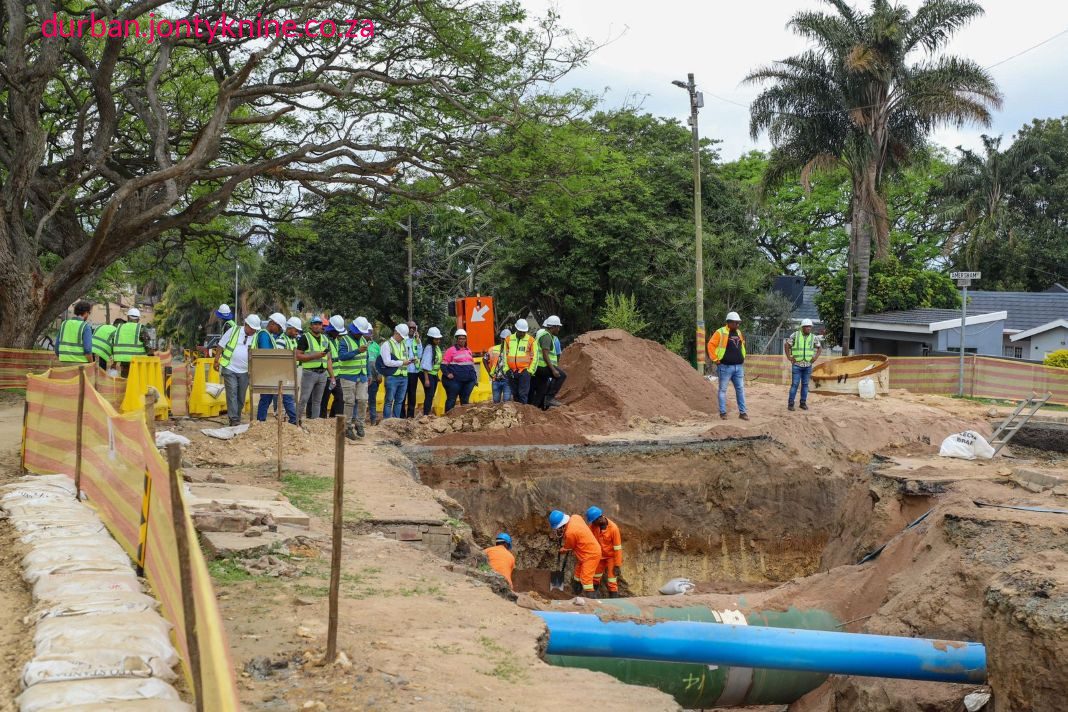
- Southern Aqueduct Upgrade: A R1.2 billion project to strengthen supply for more than 1.2 million residents in southern and central areas (uMlazi, Folweni, Chatsworth, Klaarwater, Northdene, Malvern and others). Sections have been commissioned, including a 3.8 km segment of Work Package 2 in late September 2026.
- Leak and loss reduction measures (under the 2024 Water and Sanitation Turnaround Strategy, aligned with National Treasury trading-services reforms): R565 million for specialised leak repairs; R102 million for proactive leak detection; R100 million for pipe replacement; R124 million to recruit 70 of 202 additional plumbers (target: isolate bursts within four hours); 150,000 flow restrictors installed in high-pressure zones by mid-2026; R70 million for new meters (aiming to replace 40,000 ageing units annually); R54 million to automate reservoir outlets; and further allocations for bulk meters. The strategy targets a 5% annual NRW reduction toward a long-term goal of 25% or below.
- Water tanker insourcing: Approximately R345 million invested in an internal fleet of 318 tankers (with further procurement planned), positioned as a move away from outsourced services and associated risks.
- Other bulk and local projects: Commissioning of the R56 million Ntuzuma Pump Station; a R48 million reservoir upgrade in KwaNqetho (from 1 to 6 megalitres); the R72 million Ogunjini Water Treatment Plant upgrade (capacity increased from 1 to 3 megalitres); borehole initiatives in rural areas; and planned larger schemes such as the R11 billion Lower Umkomazi Bulk Water Scheme (expected to add 78 megalitres per day by around 2029). Wastewater priorities include R791 million in interventions via uMngeni-uThukela Water and R157 million reprioritised for storm-damaged sewer repairs.
Xaba has described the recovery path as difficult but visible, stressing that tankers are an interim measure while the long-term goal remains reliable piped supply. He has also appealed to residents to protect infrastructure against vandalism, which the city says exacerbates outages.
Broader Dynamics, Nuances, and Implications
The dispute illustrates classic tensions in South African local government: ageing infrastructure inherited across administrations, fiscal pressures (high municipal debtors, irregular expenditure, and tariff constraints), skills shortages (plumbers, technical capacity), and the politics of accountability versus continuity. Independent reporting and ministerial correspondence (e.g., from the Department of Water and Sanitation) have flagged persistently high NRW, rising unresolved faults, and resource constraints, even as the city reports progress on specific projects.
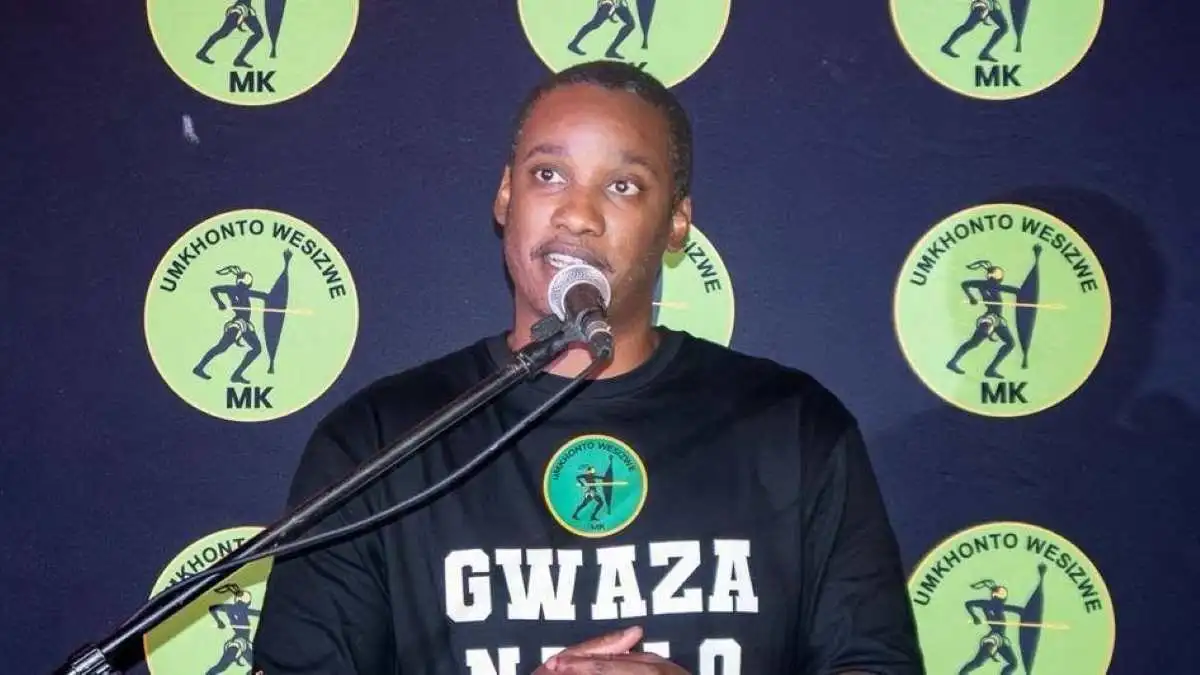
From the municipal perspective, the scale of investment and project commissioning demonstrate commitment and incremental gains, particularly on bulk supply and capacity-building. Critics, primarily the DA, argue that losses have worsened rather than improved under successive strategies, that tanker dependence has grown into a costly parallel system vulnerable to abuse, and that leadership accountability (including for Msweli) has been insufficient. Other parties, such as the MK Party, have similarly framed the crisis as a management failure rather than an intractable technical problem.
Edge cases and related considerations include the role of bulk supplier uMngeni-uThukela Water, climate and demand pressures, illegal connections and theft contributing to NRW, the financial sustainability of high water tariffs amid losses, and the risk that short-term tanker reliance crowds out long-term capital maintenance. Politically, the issue is highly salient for voter turnout and coalition arithmetic in a fragmented metro; for residents, the practical impact is daily—unreliable supply, health and hygiene risks, economic disruption for businesses and households, and eroded trust in local government.
In summary, Xaba’s defence rests on documented capital expenditure and operational interventions that the city presents as evidence of progress amid structural constraints. The DA’s demonstration and campaign messaging treat those same metrics as proof of inadequate leadership and demand structural change. The November 2026 elections will test which narrative resonates more strongly with eThekwini voters.