





The “Old Barracks” in Wentworth, Durban, refer to former military structures (primarily from the WWII era or earlier British colonial army base developments) that were later converted into residential housing, notably for Coloured communities under apartheid.
Historical Background
- Origins as Military Site: Wentworth (part of the South Durban Basin) was initiated around 1938 by British colonial authorities as an army base. It included barracks and related buildings for military personnel and families. Red-brick structures originally occupied by white military families were key features.
- Apartheid-Era Conversion: In the 1960s, following the Group Areas Act, Coloured people were relocated to Wentworth (sometimes called Austerville). Former military barracks and houses were repurposed as homes, often with communal ablution blocks. This created areas known locally as “the barracks,” including references to places like Drake Road. These were typically basic, overcrowded, and located near industrial sites like the Engen refinery.
- Alan Taylor Residence: A notable example was the Alan Taylor Residence (or Alan Taylor Hostel) on Tara Road in Wentworth. This disused barracks building housed black medical students from the University of Natal (e.g., figures like Steve Biko) because they were barred from main campus residences. It later fell into disuse.
Demolition
- The Alan Taylor Residence was demolished in 1989 (its 25th anniversary of demolition was noted in 2014). It was described as an old, disused barracks.
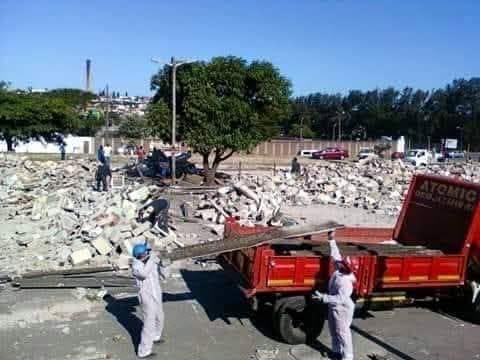
- Other parts of the old barracks housing in Wentworth (e.g., “chicken-style” or temporary council houses in areas like Tara Road) were also demolished or replaced over time, often due to poor conditions, asbestos issues, or urban development. Residents were sometimes relocated to new flats (e.g., around 2010), though many later complained about the quality of the replacements.
- Broader demolitions in Durban (including army barracks at other sites like Natal Command) occurred in the 2010s for infrastructure projects, but Wentworth’s were more tied to housing renewal near the refineries.
Context and Legacy
Wentworth became a predominantly Coloured township with a history of challenges: proximity to polluting industries (Engen and SAPREF refineries), poverty, gang violence in earlier decades, and housing struggles. Many residents have fond (if nostalgic) memories of community life in the barracks despite the hardships. A social history book, A Social History from Below, includes life stories from residents of “the barracks.”
Today, Wentworth retains some of this industrial-residential character, with ongoing issues around housing, environment, and services. Old photos (e.g., from the 1950s–1980s) occasionally appear in local Facebook history groups showing the barracks era.