



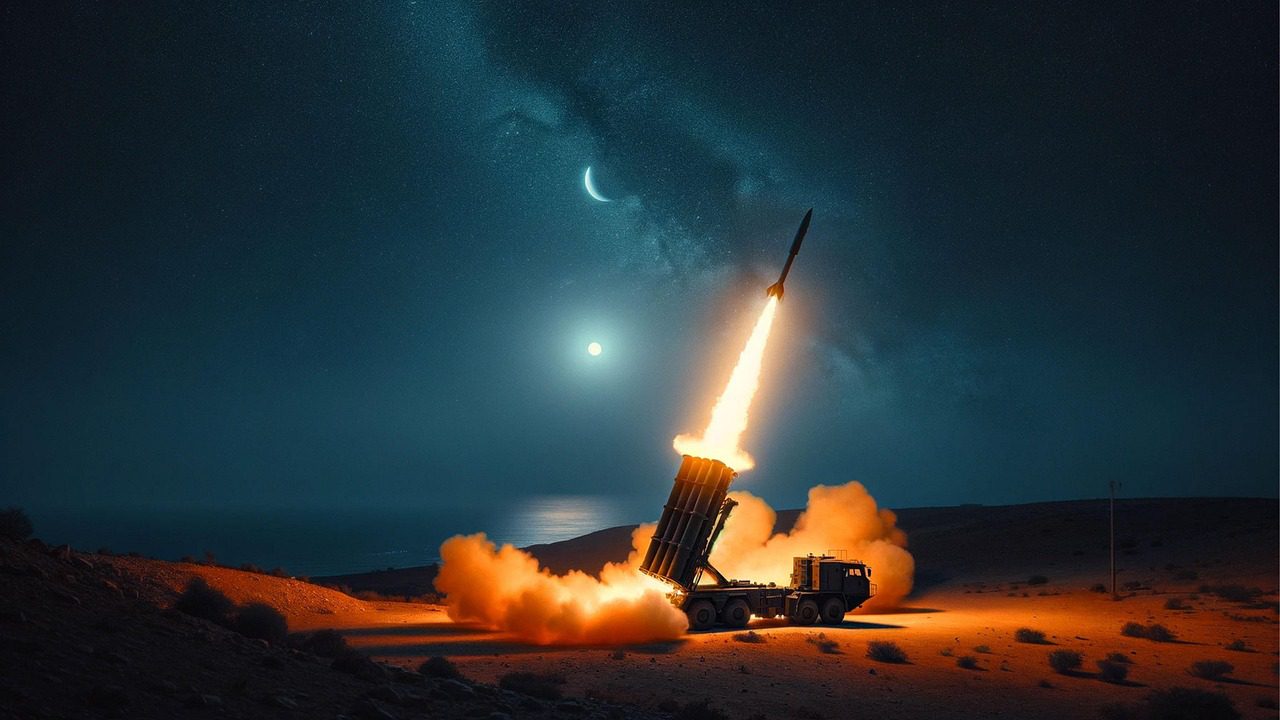
On July 28, Iran’s Islamic Revolutionary Guard Corps (IRGC) launched multiple ballistic missiles in what CENTCOM called an “attempted surprise attack” on U.S. forces in the Middle East. Targets included U.S. positions in Jordan (Jordanian forces reported intercepting five missiles). All Iranian missiles were intercepted, with no reported U.S. casualties or major damage.
In response, U.S. forces began strikes at approximately 8 p.m. ET on July 29 (early hours of July 30 local time in parts of the region). CENTCOM stated the operation concluded around 10 p.m. ET after roughly two hours. Officials said the strikes hit “dozens” of IRGC targets, specifically military command centers, missile and drone facilities, coastal surveillance and defense sites, and maritime capabilities. The stated goal was to diminish threats to American forces, commercial shipping, and neighboring Gulf countries.
Iranian state media reported explosions and impacts in southern and western areas, including Qeshm Island (in the Strait of Hormuz), Bandar Abbas, Kish Island, Abadan, and parts of Khuzestan province. Iranian reports claimed some civilian casualties, including three people killed (one a two-year-old child) and others injured or trapped on Qeshm after a residential area was hit; these figures have not been independently verified in available reporting.
President Donald Trump had publicly previewed a strong response, telling reporters the U.S. would be “hitting them very hard” because “it’s our turn,” and similar remarks in interviews.
Broader context of the conflict
This exchange fits into a larger, multi-month conflict that escalated significantly in 2026. Key elements include:
- Earlier U.S. and Israeli actions against Iranian targets (including nuclear-related sites in prior phases), followed by Iranian responses against U.S. and regional assets.
- Repeated disruptions and contested control over the Strait of Hormuz, a chokepoint for a large share of global oil and LNG trade. Shipping has faced attacks, blockades, warnings, and restricted or alternative routing at various points.
- Fragile ceasefires or memoranda of understanding that repeatedly broke down amid tit-for-tat strikes on military sites, coastal defenses, shipping, and proxies.
- Involvement of Iranian-aligned groups (e.g., in Iraq) and, more recently, joint U.S.-Saudi strikes on such groups after drone attacks on U.S. forces and Saudi infrastructure.
- A brief pause in direct U.S.-Iran strikes in the days before this latest round, which raised hopes of de-escalation or diplomacy before the July 28 Iranian missile launches and subsequent U.S. response.
The pattern has often been reciprocal: one side strikes, the other responds, with pauses that prove temporary. Iran has framed its actions as defensive or retaliatory against perceived ongoing threats and violations of agreements; the U.S. has described its strikes as necessary to protect forces, shipping, and allies while imposing costs for aggression.
Immediate impacts and implications
- Military: CENTCOM emphasized precision strikes on IRGC military infrastructure rather than a broader campaign. Iran’s ability to launch further missile or maritime attacks remains a key concern, as does the risk of further escalation involving proxies or additional regional actors.
- Economic: Oil markets reacted sharply to the renewed hostilities. Brent crude and WTI futures rose several percent (reports of roughly 7% gains in the session around the developments, pushing Brent near or above $90 in some trading), reflecting fears of further supply disruptions through Hormuz or related routes. Prices have been highly volatile throughout the conflict, swinging with each pause or escalation.
- Diplomatic/regional: The episode complicates any near-term path back to sustained talks. Saudi Arabia’s recent participation in related strikes marks a notable widening. Other Gulf states hosting U.S. forces remain exposed. Global energy security, shipping insurance costs, and alternative export routes continue to be affected.
- Human and political angles: Iranian media highlight civilian impacts from the latest strikes. U.S. messaging stresses the defensive/protective nature of the response after an unprovoked (from the U.S. perspective) attempt on American troops. Domestic and international political reactions vary widely, with debates over strategy, escalation risks, munitions stocks, and long-term goals regarding Iran’s military capabilities and the strait.
As of the most recent available reporting (around July 30, 2026), the strikes themselves appear complete for that wave, but the overall conflict remains fluid. Further Iranian responses, additional U.S. actions, proxy activity, or diplomatic maneuvers are possible. Developments in the Strait of Hormuz and any statements from CENTCOM, Iranian officials, or regional governments will be important indicators of whether this remains a limited exchange or signals renewed intensification.