




Drive-in cinema culture in early 1980s Durban was a blend of relaxed outdoor entertainment, social rituals, family outings, teenage dating, and informal community vibes, still heavily shaped by apartheid-era segregation even as small cracks began appearing in racial barriers.
The main venues included the prominent Durban Drive-In (near Brickhill Road / Sandile Thusi Road area, close to what became the Suncoast precinct) and others such as the Bluff Drive-In (Tara Road), Umbilo Drive-In (Oliver Lea Drive), and the Pinetown Drive-In. A separate facility for non-white audiences operated in Shallcross (opened in the 1970s by Pat Naidoo). These were part of a broader South African drive-in scene that had peaked earlier but remained popular into the early 1980s before gradual decline.
The Typical Experience
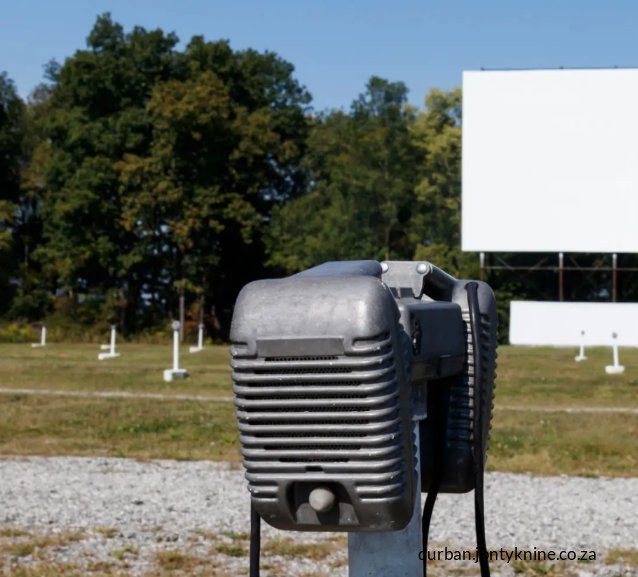
A night at the drive-in was rarely just about the film. People arrived in cars (or sometimes on motorbikes), queued in long lines especially for popular Saturday late shows, and rushed for the best viewing spots once the earlier screening cleared. Sound came from pole-mounted speakers that clipped onto the car window or (increasingly) via a dedicated radio frequency tuned on the car radio. Faulty speakers were a common complaint—landing on a broken one meant either a silent movie or leaving.
Food was central. On-site catering sold hamburgers, chips, popcorn, and other snacks. Many brought their own cooler boxes with drinks (including beer). During intervals, boots opened, people chatted with neighbouring cars, and the atmosphere became social and informal. Some patrons sat on chairs outside the car or watched from the back seats. Romantic couples often preferred the relative privacy of the car. Families appreciated being able to bring children who could sleep in the back without the formality (or dress code) of indoor “bioscopes.”
Practical quirks were part of the folklore: rainy nights caused windows to mist up (a halved raw potato rubbed on the glass was a popular anti-fog trick); people occasionally forgot the speaker and drove off still attached; free-loaders sometimes hid in boots to avoid paying; and nearby residents or fence-jumpers tried to watch from outside. The big screen itself was a landmark visible from parts of the city.
Social and Cultural Dimensions
- Dating and youth culture: It was a classic low-pressure date venue—more relaxed than indoor cinemas. Young people could cuddle, talk, or simply enjoy the open-air setting under Durban’s warm evenings. Surfing pioneer Baron Stander later recalled it as a “big deal” in his youth, going two or three times a month (sometimes on a motorbike).
- Family and community: For many it was affordable, casual family entertainment. In the Indian community, the Shallcross drive-in was especially valued as genuine, cheaper family outings that strengthened neighbourhood ties—people often brought neighbours along.
- Atmosphere: Nostalgic accounts emphasise the vibe over the movie itself—cooler boxes, chatting between cars, the occasional loud music from someone’s new speakers, and the sense of shared outdoor leisure. It felt freer and less formal than indoor theatres.
Racial Segregation and Early Changes
Apartheid strictly shaped access. The main Durban Drive-In (and most others) was effectively whites-only for much of the period. Non-white patrons sometimes drove past and tried to glimpse the screen from the road (without sound). The Shallcross venue provided a dedicated alternative for Indian and other non-white audiences and was remembered fondly as community-oriented.
By the early 1980s, limited desegregation began nationally. In Cape Town, all drive-ins opened to multi-racial audiences around 1980. Similar pressures and commercial incentives existed in Durban, though full integration of cinemas and drive-ins was uneven and gradual (broader cinema desegregation accelerated later in the decade). Drive-ins, being outdoor and car-based, sometimes felt less rigidly controlled than indoor venues, but the colour bar remained a defining reality for most of the early 1980s.
Wider Context in Early 1980s Durban
The drive-in fitted into a broader car-oriented leisure culture that also included beachfront roadhouses (though iconic ones like the Cuban Hat and The Nest had already closed by the mid-1970s). Movies of the era—Hollywood blockbusters, local releases, and whatever was available under cultural boycotts—played on the big outdoor screens. Video was beginning to emerge as competition, and economic and political pressures of the decade would eventually contribute to the long decline of drive-ins (the main Durban one lasted until 2005).
In short, early-1980s Durban drive-in culture offered a distinctive mix of movie-watching, socialising, privacy, and outdoor ease that many later recalled with strong nostalgia. It was shaped by the era’s cars, climate, food rituals, and the constraints (and small openings) of apartheid. Personal memories often stress the “vibe”—the cooler boxes, the chats, the stars overhead, and the relative freedom of the car—more than any specific film.