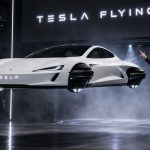




Tesla first showed a prototype of the next-gen Roadster in November 2017, promising radical performance (originally ~1.9-second 0-60 mph, 250+ mph top speed, ~620-mile range) and a base price around $200,000 (Founders Series higher). Production was initially targeted for ~2020 but has slipped repeatedly—multiple times into the mid-2020s. As of mid-to-late 2026, production is guided for 2027 or 2028 at Gigafactory Texas, with the October 1 event serving as a design/demo reveal rather than the start of deliveries. Many early reservation holders (some of whom put down $50k–$250k years ago) have canceled amid the delays.
Elon Musk has long teased a “SpaceX package” (internally referenced in reports as A71) involving roughly 10 cold-gas thrusters. These use ultra-high-pressure compressed gas (nitrogen or air, stored in composite-overwrapped pressure vessels similar to those on SpaceX spacecraft) expelled through nozzles—no combustion. The system is intended to:
- Boost acceleration dramatically (claims of sub-1-second or ~1.1-second 0-60 mph by applying thrust directly to the chassis, bypassing tire grip limits).
- Improve braking, cornering, and stability via directional thrust.
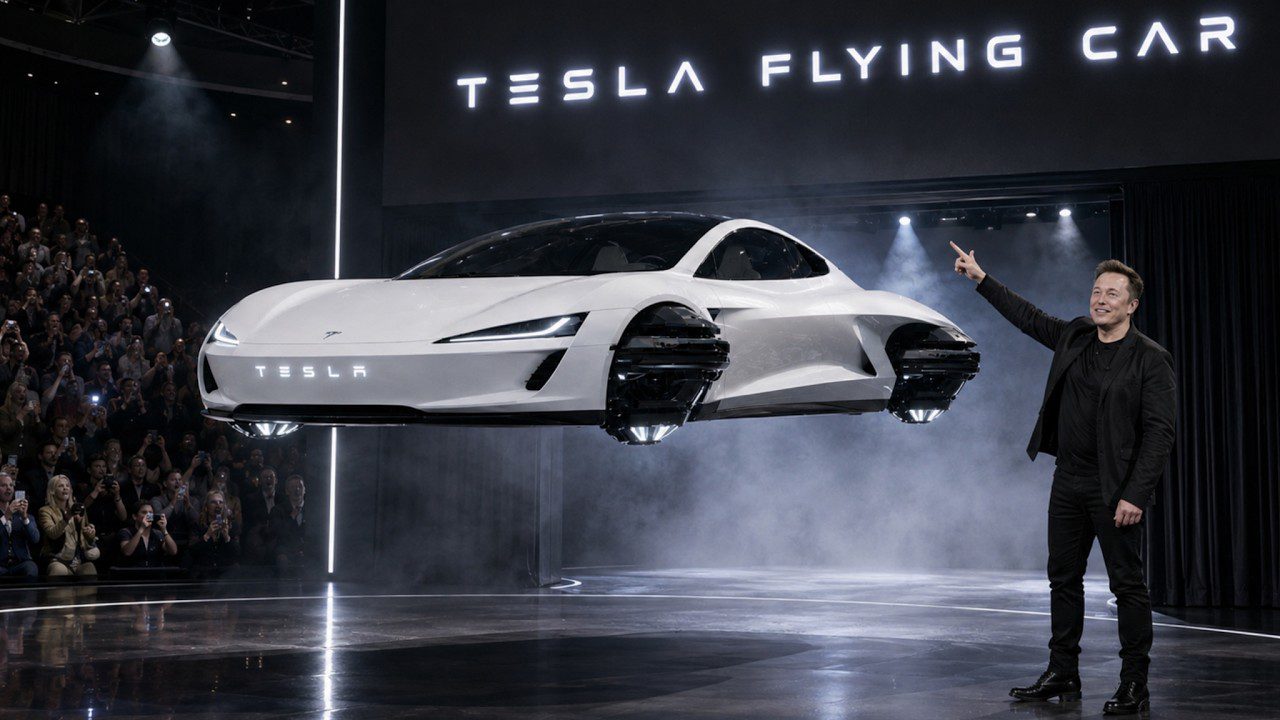
- Enable brief lifts, hops, or hovering for short distances.
Musk has repeatedly framed this in “flying car” terms—e.g., responding to comments about promised flying cars with “You will get flying cars,” referencing Peter Thiel’s desire for them, and calling the tech “crazy” (crazier than James Bond gadgets) while promising an unforgettable demo. Earlier concepts were more ambitious (e.g., racing up a ramp, driving inverted, then hovering), but reports indicate the public demonstration has been scaled back toward remote-operated hovering or short lifts.
What the “Flying” Capability Actually Means
This is not an aircraft or eVTOL-style flying car. Key realities from reporting and technical descriptions:
- Hovering/short hops, not sustained flight: Cold-gas thrusters provide short-duration thrust. They can briefly lift the vehicle or assist jumps, but propellant is limited (high-pressure tanks replace rear seats in the package), so flight time is measured in seconds, not minutes. It is closer to a powered hop or hover than free flight. One source described the evolution from “almost making an aircraft” to “something closer to hovering.”
- Demo constraints: Planned demonstrations (previously targeted at SpaceX’s McGregor, Texas test site, with the October 1 event near Waco) involve remote operation with no one inside the vehicle. Spectators are kept hundreds of yards/meters away due to extreme noise levels that risk hearing damage. The limited-edition thruster-equipped version is expected to be non-street-legal, potentially sold only to a small number of customers via a supervised track program (Ferrari XX-style), and priced in the hundreds of thousands to possibly millions.
- Physics and practicality: Thrust acts on the chassis independently of tire traction, enabling acceleration beyond what rubber-on-road allows. However, the system adds weight, complexity, cost, and limited “shots” before refilling. Base (non-thruster) performance is already extreme; the package is optional and primarily for spectacle/track use. Safety, regulatory, noise, and energy constraints make production road-legal “flying” versions highly unlikely in the near term.
- Related tech: There are also references to ground-effect aerodynamics, fan systems for downforce (patents involving side skirts and underbody sealing), and radical styling changes from the 2017 concept (teaser imagery has shown thruster plumes, a large wing/spoiler, full-width rear lighting, and possible “Cyber” design influences).
Current Status (as of September 20, 2026)
- October 1, 2026 reveal: Confirmed via Tesla’s “Go for launch” post and website countdown. Location tied to the Waco/McGregor area. Expect the thruster system to be showcased (possibly with a remote hover/lift demo). Production remains 12–18+ months after the reveal.
- Two versions discussed: A more conventional (still hypercar-level) Roadster and a limited SpaceX-package edition focused on the thrusters.
- Caveats and history of delays: The project has a long track record of slipped dates. Internal demos of the thruster system occurred earlier in 2026, but public timing has shifted (e.g., earlier 2026 targets moved to August then October). Success of a dramatic live demo is not guaranteed; Musk has noted excitement is assured even if things go imperfectly.
Broader Context and Implications
True flying cars (eVTOLs, personal aircraft) face major regulatory, infrastructure, noise, energy density, safety, and cost hurdles; several specialized companies are pursuing them independently of Tesla. The Roadster’s thrusters represent a crossover of automotive and aerospace tech for performance and spectacle rather than practical personal aviation. It continues Tesla’s pattern of ambitious, delayed moonshot features (similar to early Autopilot/Full Self-Driving or Cybertruck timelines).
If the October 1 event delivers a visible hover or lift, it will be a memorable engineering demonstration. Realistic expectations should center on a very fast electric hypercar with an exotic optional thruster package for short, controlled aerial moments—not a vehicle that replaces cars with free flight. Production cars (especially street-legal ones) will prioritize the electric powertrain, range, and handling over sustained flight capability. Further details on final specs, pricing, and exact thruster performance should emerge at or shortly after the reveal.