



The protests began as a large-scale day of action uniting high-school and university students (protesting deteriorating school conditions, underfunding, and overcrowding), trade unions (notably the CGT), Yellow Vest (Gilets Jaunes) activists, and broader groups angry about the rising cost of living, fuel prices, and strained public services. Turnout was substantial: the Interior Ministry estimated around 550,000 participants across more than 100 marches nationwide (including about 110,000 in Paris), while organizers put the figure closer to 800,000.
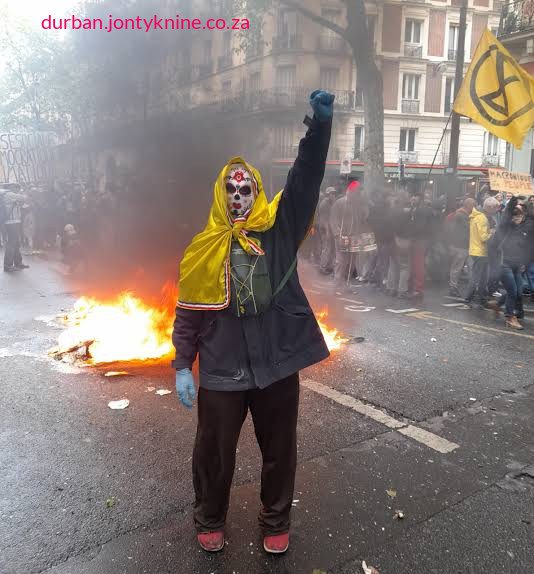
Most marches remained largely peaceful during the day. However, smaller groups of black-clad, masked individuals (often described by officials as ultra-left or “casseurs”) and opportunistic looters escalated events into widespread violence and property destruction in the evening. Notable incidents included:
- Clashes with police involving tear gas, projectiles, and fireworks in Paris (especially around Place de la République) and other cities.
- Looting of hundreds to thousands of businesses (estimates around 1,500–3,000 shops, ranging from local stores and pharmacies to luxury outlets).
- Arson attacks: Lyon’s tourist office was set on fire; Limoges’ historic 19th-century city hall suffered major fire damage with partial roof collapse; cars, bins, and other structures burned in multiple cities.
- In Marseille, protesters briefly entered city hall and damaged symbols of the Republic.
Arrest figures rose over subsequent days to roughly 2,400–2,700 people taken into custody (many adults with no prior records in some reports). Hundreds of police and firefighters were injured. Justice Minister Gérald Darmanin reported hundreds of fast-track convictions and prison sentences in the following days. Authorities later acknowledged intelligence and deployment shortcomings that left city centers vulnerable.
Government response and preparations for October 24
In the days after, partial curfews were imposed in sensitive areas of Paris (e.g., Place de la République and Les Halles, extended into the weekend), Marseille, Lyon, and elsewhere. Public transport was suspended in Marseille for Saturday. Museums including the Louvre, Orsay, and Picasso were scheduled to close, and many businesses boarded up storefronts.
For the October 24 protests (called by student groups, Yellow Vest coordinators, and others, with unions in some supporting roles), the government announced a major security operation:
- Deployment of approximately 70,000 police and security personnel nationwide, including elite units, mobile squads, armored vehicles, and water cannons. Military (Sentinelle force) elements were also authorized to free up regular police.
- Total bans on protests in Marseille and Lyon (and restrictions limiting some events elsewhere to authorized union marches). A Paris court had previously lifted a local ban on at least one earlier demonstration.
- Surveillance drones in Paris and a firm public stance against rioters and looters. Interior Minister Laurent Nuñez accused “ultra-left” groups of online incitement to target public buildings.
Additional tensions included a shooting west of Paris (suspected Islamophobic motive, killing one and wounding others including a child) and the National Rally (far-right) party congress in Orléans, which drew planned counter-demonstrations by left-wing and anti-racist groups and was viewed as a potential flashpoint.
Broader context and implications
The unrest reflects converging pressures: prolonged student mobilizations since September over education, persistent cost-of-living strains (energy, fuel, housing, purchasing power), fiscal concerns (French bond yields rose sharply amid the disorder, with the France-Germany 10-year spread widening notably), and political polarization ahead of the next presidential cycle. President Emmanuel Macron condemned the violence while acknowledging legitimate grievances among peaceful protesters; far-right voices blamed migration or radical Islam (claims Macron rejected), while officials pointed to ultra-left agitators and opportunistic crime.
Similar cost-of-living protests and scattered unrest appeared in other European countries around the same period. Economic impacts included business losses (e.g., supermarket chains reporting tens of millions in damage/theft) and market jitters. Critics on various sides have debated policing tactics (including use of crowd-control munitions that caused serious injuries in earlier weeks) and the balance between free assembly and public order.
As of the morning of October 24 (SAST time), the day was still unfolding with heavy security visible and many sites closed or restricted. Outcomes will depend on turnout, whether fringe violence reappears, weather in some regions, and the effectiveness of the reinforced policing. Peaceful demonstrators continue to emphasize demands around education funding, living costs, and public services, while authorities prioritize preventing a repeat of the prior weekend’s chaos.