


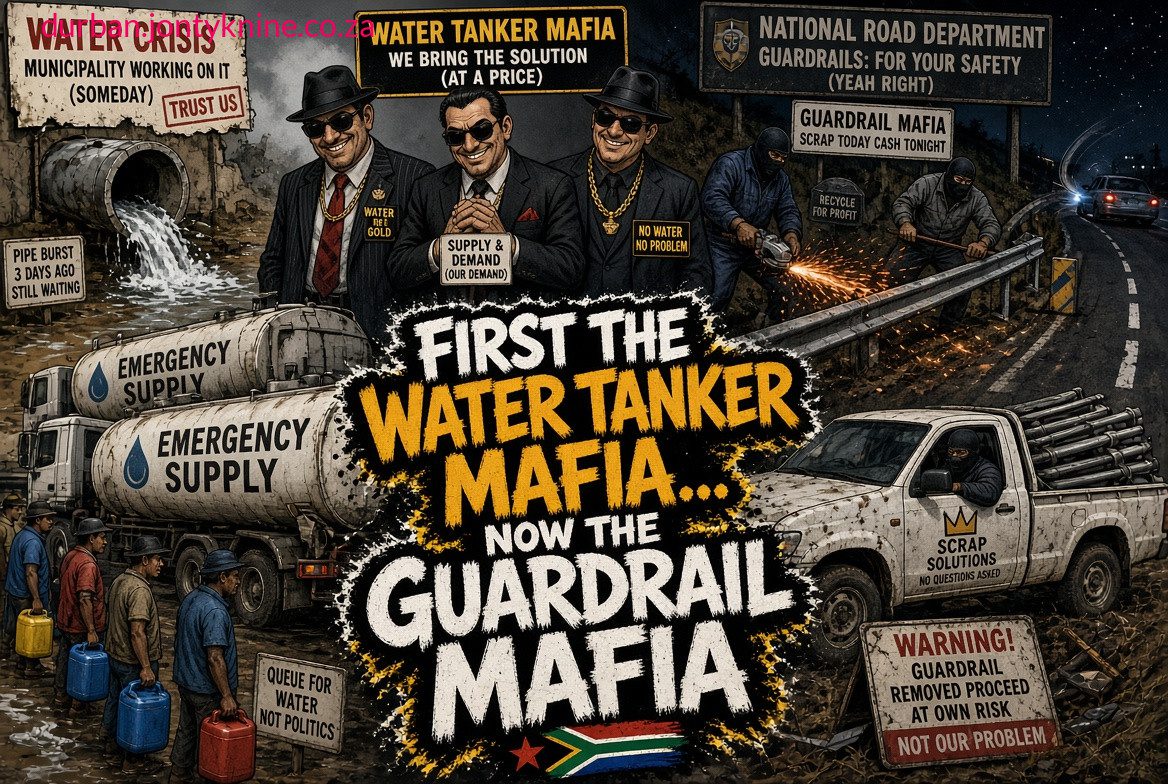
The water tanker mafia is the better-known one: organised groups that deliberately damage or sabotage municipal water infrastructure (pumps, valves, pipelines) so that communities run dry, then step in with private tankers and lucrative emergency contracts. It has been especially active in Gauteng, KwaZulu-Natal, Mpumalanga and parts of the Eastern Cape, with hundreds of millions (in some metros, hundreds of millions in a single financial year) flowing into these arrangements while the underlying systems keep failing.
Now the guardrail mafia has joined the roster. In KwaZulu-Natal, organised crews have been systematically stripping steel guardrails from provincial and national roads. The KZN Department of Transport puts the replacement and repair bill at more than R500 million over the years. The theft has real consequences: sections of road without barriers have been linked to fatal crashes (including a 2025 bus crash that killed nine people, among them a child). Arrests have been made, including people described as runners and an alleged kingpin, and the probe is being extended beyond KZN with possible links to departmental officials under investigation.
Both fit a familiar pattern: critical public infrastructure that is already under strain becomes a business model for people who can either create or prolong the shortage/failure, then monetise the “solution.” The names are darkly accurate.