



Children lost years of childhood. Families watched businesses they had built over a lifetime disappear.
And while the country suffered, Anthony Fauci was writing in his diary about becoming “the most famous and talked about person in the country” and marveling that his fame was “explosive and really unimaginable.”
There was no camera he couldn’t find. No interview he couldn’t give. No American life he wouldn’t micromanage.
He said one thing to the public, and would write the opposite in his diary.
Today, when the country finally demanded answers, the man who never stopped talking suddenly went silent.
On or around May 21, 2020 (with related notes in surrounding weeks), Fauci wrote privately of a “very flattering” front-page Washington Post piece and stated that “the situation with my national and international fame is explosive and really unimaginable. It is not hyperbole to say that today I am the most famous and talked about person in the country and one of the most recognizable person in the world.” He tracked press coverage obsessively (“Press still hot and heavy about me. Multiple stories per day…”), noted celebrity interactions (Barbra Streisand, Julia Roberts, Joan Baez and others), merchandise and fan phenomena, and observed that Trump seemed “enamored” even as Fauci took the spotlight. These appear alongside contemporaneous notes on case and death counts.
The broader portrait from the released pages (covering roughly late 2019–2022 and maintained on government systems) includes other points of tension between private notes and public messaging. Examples cited across reporting include early private acknowledgment that the Wuhan market was likely an “amplifier” rather than the original source, while public messaging for a period emphasized the natural zoonotic/wet-market framing; and diary claims of personally influencing New York City school closures and related restrictions (e.g., advising Mayor Bill de Blasio), contrasted with later public statements minimizing or denying a direct role in such decisions. The diaries also record growing private frustration with Trump and certain governors, media management, and security concerns from threats that accompanied the fame.
Context on the human costs referenced
The pandemic and the non-pharmaceutical interventions that accompanied it produced severe, measurable harms beyond the virus itself. Prolonged school closures and remote learning correlated with substantial learning loss, developmental setbacks, and mental-health declines for children—effects that were unevenly distributed and more severe for lower-income and minority students in many datasets. Small businesses, especially in hospitality, retail, and services, faced widespread permanent closures; lifetime-built enterprises were among those lost. Excess non-COVID mortality, delayed medical care, social isolation effects, and economic scarring were real and documented. These outcomes are not seriously disputed in the post-pandemic literature, even among those who argue the early restrictions were reasonable given uncertainty in 2020. Attribution is complex: the virus drove direct deaths and hospital strain; policy choices (duration, uniformity, enforcement, and the balance of risk) amplified secondary costs. Fauci was a highly visible advocate for many of the more restrictive approaches, though ultimate decisions rested with elected officials, governors, and local authorities.
Public role versus private notes
Fauci was extraordinarily visible—White House briefings, constant media appearances, and a status that turned him into a cultural symbol for some and a lightning rod for others. That visibility was partly structural (longtime NIAID director, task-force member) and partly self-reinforcing through media access. The diary’s focus on coverage, profiles, and personal recognition while death tolls mounted is, on its face, unflattering and fuels the critique of misplaced priorities or detachment. At the same time, public officials under intense scrutiny often monitor press and public reaction as part of managing a crisis; the volume and tone of self-regard stand out relative to the contemporaneous human costs.
On consistency: early 2020 featured genuine scientific uncertainty about transmission, asymptomatic spread, fatality rates by age/comorbidity, and optimal interventions. Guidance evolved (masks, surface transmission emphasis, school policies). Some shifts tracked evidence; others have been criticized as lagging, overconfident, or influenced by institutional and political factors. Private notes that diverge from contemporaneous public statements raise legitimate questions about candor, especially on origins and the precise degree of personal influence over lockdowns and closures. Separate from the diary, long-running disputes involve NIH/NIAID funding related to bat coronavirus research (including work involving EcoHealth Alliance and the Wuhan Institute of Virology), definitions of gain-of-function, and the lab-leak hypothesis—topics on which Fauci’s public positions and the evolving evidence have been heavily contested.
The recent silence and hearing
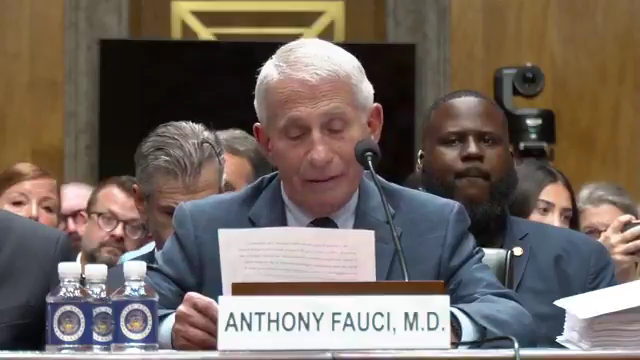
As of the current date (July 29, 2026), Fauci appeared before the Senate Homeland Security and Governmental Affairs Committee (chaired by Paul) and invoked the Fifth Amendment, declining to answer questions. He cited advice of counsel and characterized the proceeding as driven by a personal grudge and prior public calls for prosecution, noting he had previously testified under oath multiple times. This is a sharp contrast with the years of near-constant media availability. Invoking the Fifth is a constitutional right and does not itself prove wrongdoing; it does, however, intensify public and political scrutiny when the same individual previously spoke freely and authoritatively.
Broader implications and competing perspectives
- Accountability and institutional trust: The combination of high personal visibility, policy influence, private self-focus documented in the diary, and later reticence under oath fuels arguments that key public-health figures prioritized narrative control, institutional protection, and personal stature over transparent risk-benefit analysis and updating. Critics see this as contributing to eroded trust in expert institutions. Defenders emphasize the unprecedented nature of the crisis, the absence of perfect information, the pressure of real-time decision-making under political crossfire, and Fauci’s long prior record on HIV/AIDS and other threats.
- Origins and research policy: If a lab-related origin is ultimately confirmed or remains highly plausible, questions about U.S.-funded research, biosafety, and early messaging become more acute. Even under a natural-origin scenario, the handling of debate (labeling lab-leak discussion as fringe or conspiratorial early on) damaged credibility.
- Trade-offs and future preparedness: The episode underscores the difficulty of balancing acute mortality risk against long-term social, educational, and economic harms—especially for groups (children, small-business owners) with lower direct COVID risk. It also highlights risks when scientific advice becomes tightly coupled with political messaging and media amplification.
- Individual versus systemic: Fauci was neither sole architect nor powerless messenger. Many jurisdictions and countries adopted similar or stricter measures; others (e.g., Sweden’s earlier emphasis on voluntary measures and protecting the vulnerable, or later reopenings in places like Florida) produced different cost-benefit profiles that remain debated. Focusing exclusively on one individual can obscure deeper issues of incentives in public-health bureaucracies, media dynamics, and political polarization.
The diary does not rewrite the entire scientific record of 2020–2022, but it supplies primary-source evidence of mindset and priorities that many find jarring against the backdrop of childhood disruption, business destruction, and mortality. It strengthens calls for fuller transparency on decision processes, research funding, and the full range of trade-offs. Whether that leads to institutional reform, legal consequences, or simply further polarization depends on how subsequent investigations, hearings, and historical assessments proceed. The public record now includes both the contemporaneous public statements and these private reflections; evaluating the gap between them is a legitimate exercise in democratic oversight.