





Key details from the report
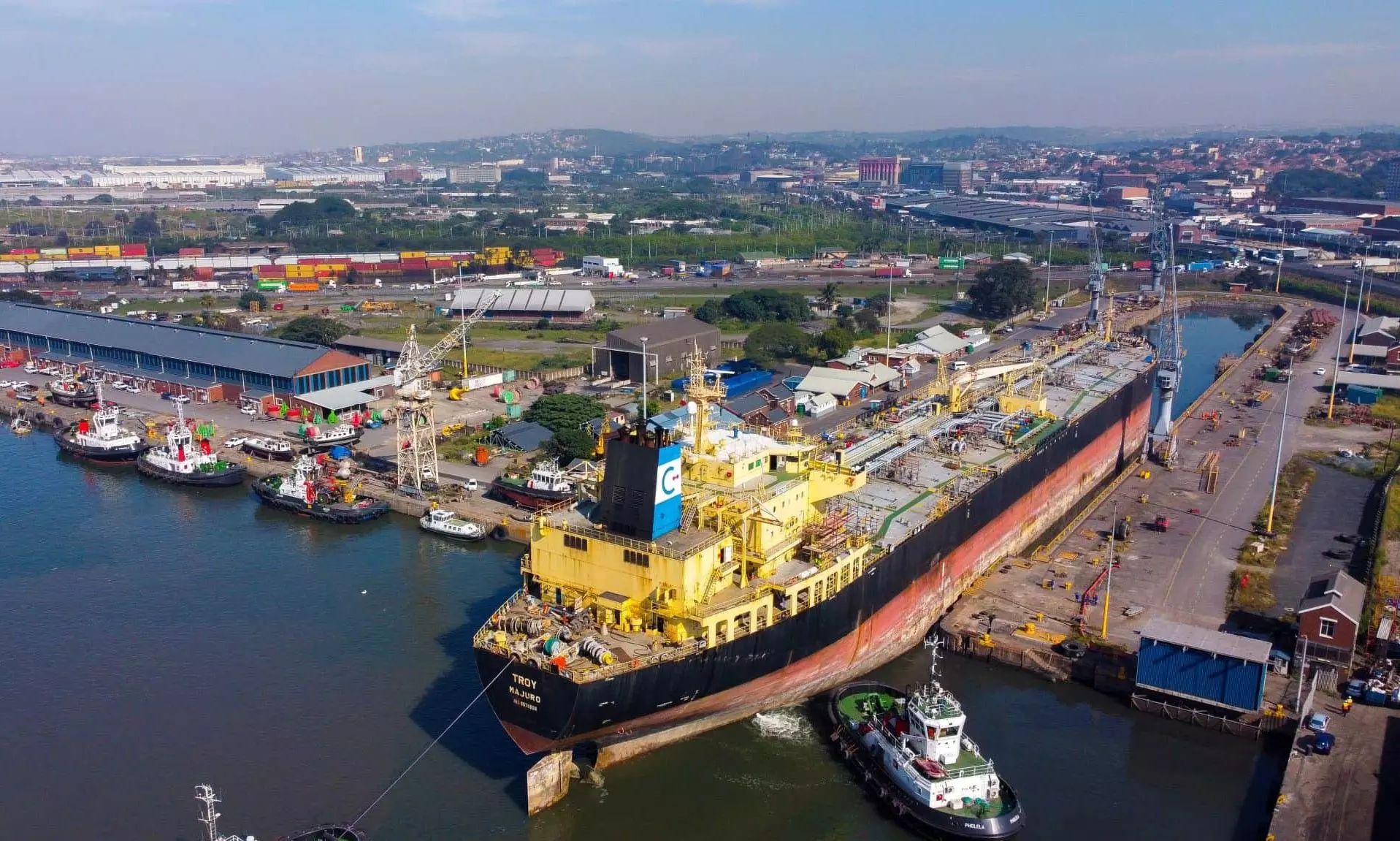
- The docking took place around late July 2026 (article dated 30 July 2026).
- TNPA highlighted it as evidence of the dock’s improved capacity after ongoing infrastructure upgrades.
- The Troy is scheduled to remain for about nine days for essential maintenance and statutory inspections.
- The operation is expected to support specialised maritime skills development and generate employment and business opportunities across the local ship-repair value chain.
- TNPA framed the event as part of broader efforts to strengthen the Port of Durban’s ship-repair capabilities and its ability to handle larger vessels. The authority manages South Africa’s commercial seaports and is responsible for port infrastructure and services.
Context and significance
The Prince Edward Graving Dock is a long-standing dry-dock facility in Durban. Accommodating a 228 m tanker after a decade-long gap signals restored or expanded capability for larger vessels—important for a major African port that competes for ship-repair work in the region. Successful dry-docking of this scale typically requires precise coordination of docking systems, structural integrity of the dock, supporting services (power, water, waste handling, specialised labour), and compliance with safety and environmental standards for a crude-oil tanker.
By handling the Troy, TNPA aims to reinforce the dock’s position as a key ship-repair hub in Africa and to demonstrate that recent upgrades are delivering operational results. For the local economy this can mean short-term work for dockside teams, contractors, and service providers, plus longer-term signalling that Durban remains a viable option for owners of larger tankers needing maintenance or surveys.
Broader implications
- Port competitiveness: Larger-vessel capability can help Durban attract more repair business that might otherwise go to facilities in other African or Middle Eastern ports.
- Skills and supply chain: The nine-day stay creates demand for specialised trades (welding, coating, non-destructive testing, tank cleaning, etc.) and supporting logistics.
- Infrastructure investment narrative: Public announcements of this type are often used to show that capital works or rehabilitation programmes are yielding tangible capacity gains.
- Operational risks and constraints: Dry-docking a large tanker still involves careful planning around tidal windows, vessel condition, residual cargo/residue management, and environmental controls. Any future increase in such calls will depend on sustained reliability of the dock and associated services.
The source is a relatively brief trade-news item based largely on a TNPA social-media post; it does not provide technical specifications of the upgrades, exact dimensions of the dock relative to the Troy, or detailed cost/benefit figures. For deeper technical or financial analysis one would need TNPA engineering reports, vessel AIS/port records, or follow-up industry coverage.