





Etymology and Naming
The name derives from Afrikaans/Dutch elements: vel (skin or hide) + skoen (shoe), later associated with veld (open country or field). Early forms include velschoen, veldschoen, and variants. Dutch sources record veldschoen as early as 1676 for similar outdoor shoes elsewhere; in the Cape context it appears in travel accounts from the 1820s onward (e.g., William Burchell in 1822 describing “velschoen” or “veld-schoen” made by Khoikhoi people from hide).
Both “hide shoe” and “field shoe” meanings are historically plausible and became intertwined. The everyday nickname “vellies” (or “velskoene”) remains common across southern Africa.
Indigenous Origins and Early Adaptation
The basic form predates European settlement. Khoisan (Khoikhoi and San) peoples of southern Africa used soft leather hides—often a single piece wrapped, strapped, or roughly sewn—as protection against thorns, rocks, and harsh ground. These were practical, lightweight, and made from locally available animal skins.
When Dutch settlers arrived at the Cape in 1652 (and subsequent European groups), their buckled, heeled European shoes proved poorly suited to the local terrain and climate. They adopted and refined the local style: adding structure, laces, and more consistent stitching while retaining the soft, mouldable character. The result was a moccasin-like shoe of rough (often untanned) hide, soft sole, and construction without nails—easy to make on farms with minimal tools.
18th–19th Centuries: Everyday Wear and the Great Trek
By the 18th and early 19th centuries, veldskoene were established among farming communities. Historical accounts describe them worn by men, women, and children, varying in neatness, leather type, and instep height. They were valued for being lightweight, tough, and repairable.
During the Great Trek (roughly 1835–1845), Voortrekkers migrating inland by ox-wagon relied heavily on them. The shoes appear in depictions at the Voortrekker Monument in Pretoria, reflecting their practicality for long-distance travel over rough country. Farmers and soldiers in 19th-century conflicts also preferred them over imported or store-bought alternatives for comfort and durability.
Commercial production began in the 1830s. German Rhenish missionaries founded the settlement of Wupperthal (Wuppertal) in the Cederberg region of the Western Cape around 1830. Johann Gottlieb Leipoldt (sometimes linked with the Strassberger family enterprise) established a shoe factory there by about 1834–1836. It became renowned for hand-sewn soft suede or leather veldskoene and provided skilled work for local artisans (including Khoisan and Coloured craftsmen). The factory’s products were famous across South Africa for comfort and quality for nearly a century; related enterprises continued operating into modern times. Other early makers, such as Charles Searle’s operation at Great Brak River (from 1859), also produced similar “country shoes.”
Construction Traditions
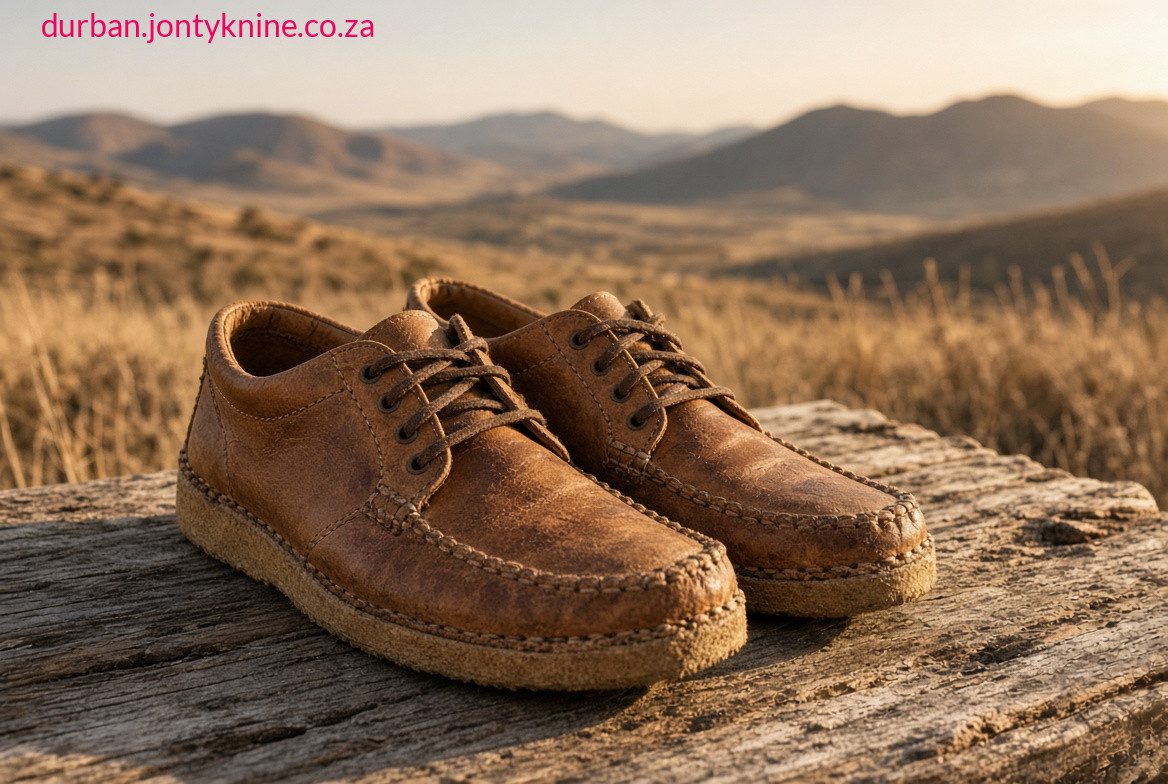
Classic veldskoene use stitchdown construction: the upper leather is flanged outward and stitched directly to the insole (historically often by hand while the leather was still workable). No nails or tacks are used. Early versions were frequently a single piece of hide with a soft sole; later ones added thicker leather or rubber soles. Materials varied by local supply—ox-hide, other cattle hides, and in Namibia kudu or seal leather. Soles were sometimes cut from old car tyres. The shoes mould to the wearer’s feet over time and are relatively easy to repair or re-sole.
20th Century: Wars, Everyday Culture, and Global Influence
Veldskoene remained everyday rural and working footwear across South Africa, Namibia, and what was then Rhodesia (Zimbabwe). They were worn by farmers, labourers, and soldiers.
A pivotal chapter occurred during the Second World War in North Africa. South African troops found standard military boots unsuitable for desert conditions and commissioned local Egyptian cobblers (notably in Cairo’s bazaars) to make lighter, more comfortable versions based on the familiar veldskoen—often with soft suede uppers and crepe-rubber soles for better grip on sand.
Nathan Clark of the British firm C&J Clark encountered these shoes (or very similar ones associated with South African soldiers). After the war he developed the Clarks desert boot, closely modelled on the round-toe, soft-upper style. Launched around the late 1940s/early 1950s, it became an international fashion icon—adopted by Mods in Britain, students in Paris, beatniks in America, and later broader casual wear. Thus a practical southern African field shoe helped shape a global footwear classic.
Modern Revival and Cultural Status
In the late 20th and early 21st centuries, veldskoene retained strong associations with rural life, Afrikaner heritage, and southern African practicality, while also being worn more widely. Production continued in traditional workshops and small factories.
A notable commercial revival began in 2016 when friends Nick Dreyer and Ross Zondagh founded the brand Veldskoen Shoes. Inspired by a desire for more distinctly South African representation (after watching the Rio Olympics opening ceremony), they modernised the classic stitchdown design with brightly coloured soles and laces referencing the national flag and “rainbow nation.” The brand trademarked the name in its specific commercial use, partnered with established South African manufacturers, and expanded exports significantly while emphasising local craftsmanship and the shoe’s heritage. Other makers continue traditional and updated versions.
Today veldskoene (and their modern iterations) are appreciated for comfort, durability, and cultural resonance. They appear in both practical outdoor contexts and fashion settings, and have gained international visibility—including among celebrities and British royals in recent years. Variations exist in leather type, colour, sole material, and detailing, but the core principles of soft leather, stitchdown construction, and adaptability to the foot remain.
In short, the famous veldskoen is a living example of cultural exchange: indigenous practical knowledge refined by settlers, commercialised by missionaries and farmers, carried by soldiers into wartime improvisation, and continually reinvented while remaining recognisably southern African. Its endurance reflects both functional excellence on the veld and a strong sense of regional identity.