

What initially appears peripheral is presented as part of a broader pattern of organised crime infiltration into policing, turf wars, and the use of official operations as cover for targeted eliminations.
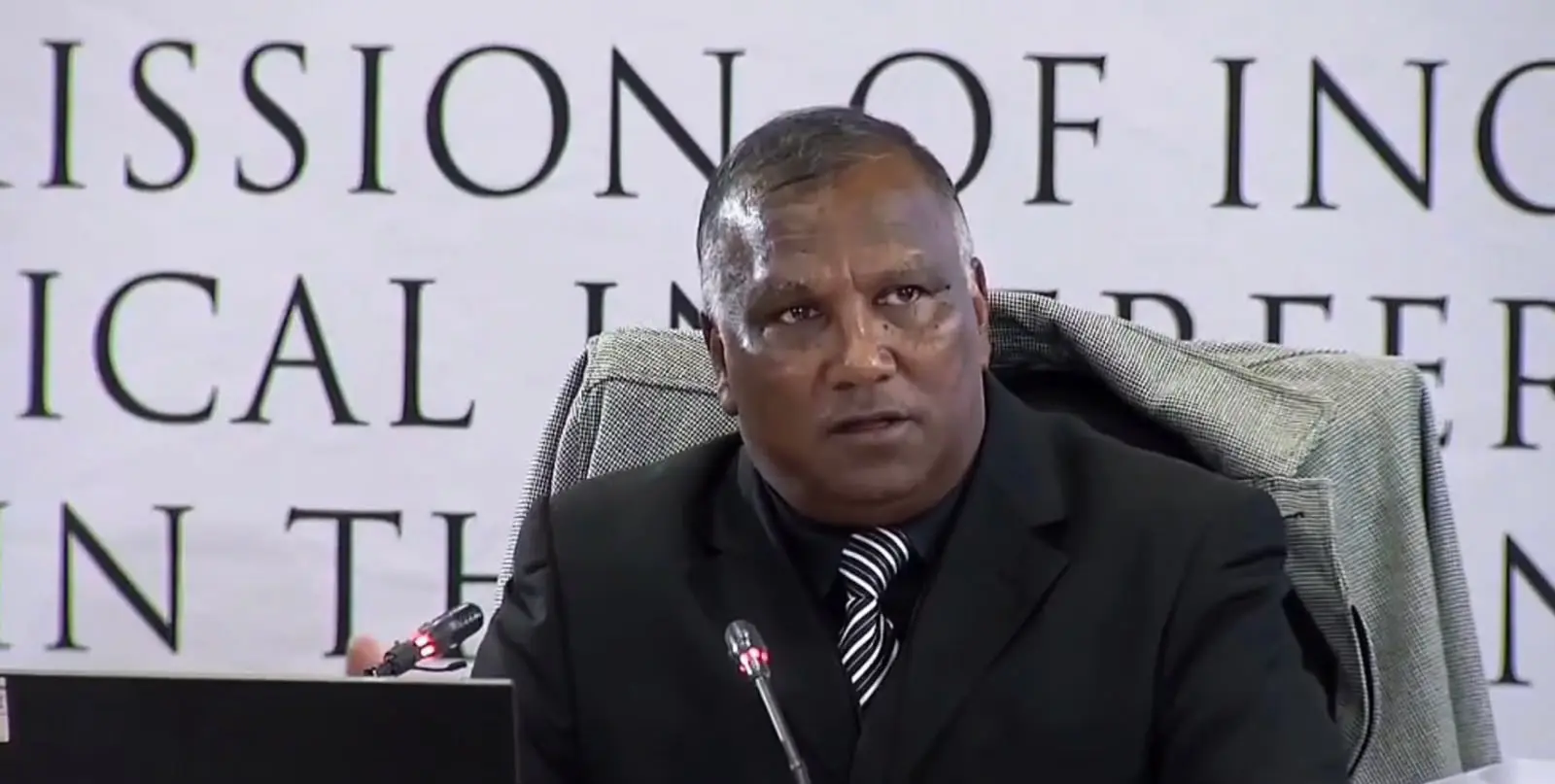
The Judicial Commission of Inquiry into Criminality, Political Interference and Corruption in the Criminal Justice System (the Madlanga Commission), chaired by retired Constitutional Court Justice Mbuyiseli Madlanga, was established in mid-2025 after public allegations by KwaZulu-Natal Provincial Police Commissioner Lieutenant-General Nhlanhla Mkhwanazi. Its mandate covers syndicate infiltration of the SAPS, intelligence structures, prosecution services and related institutions. Hearings have examined large-scale drug seizures, alleged cartels (including the “Big Five”), political interference, and specialised units’ conduct. In August 2026 the commission turned to KZN task-team operations and the towing sector.
Core allegations from IPID testimony
On 12 August 2026, Independent Police Investigative Directorate (IPID) Deputy Director for Investigations in KwaZulu-Natal, Len (or Len Barnabas) John, told the commission that long-standing corrupt relationships exist between some SAPS members and tow-truck operators. Officers allegedly receive payments or “commissions” for referring business at accident scenes—contacting preferred operators who then pay for the leads. John stated this is a known practice at station level.
He went further, alleging that some operators involved in drug transportation pay corrupt officers to shield their vehicles from searches. Tow trucks, he said, are used in many cases to move and distribute drugs within the eThekwini (Durban) area and beyond; the industry’s informal, cash-based nature and close police ties make it vulnerable to organised crime. John emphasised he was not claiming every operator is involved, but that the drug and towing sectors frequently overlap.
These links are said to feed into more serious violence. John described specialised task teams (focused on cash-in-transit robberies, drugs, and the taxi industry) as having been drawn into criminal networks. Between 1 April 2023 and 31 May 2026, IPID investigated more than 300 cases; 77 of them involved the deaths of 149 people attributed to task-team action. John characterised many of these as extrajudicial killings rather than legitimate shoot-outs, noting that recovered firearms were often few relative to the number of deceased and that dockets frequently lacked strong links between the dead and the alleged crimes. He said the teams “go out to kill.”
The Bevan Loftus case and turf-war claims
A focal incident is the 1 April 2023 fatal shooting of Bevan Loftus (a Durban tow-truck operator and taxi-industry figure) and four others inside a Morningside flat. Police recorded it as a drug-raid shoot-out in which the deceased opened fire. John and other evidence suggested otherwise: limited forensic linkage to the claimed offences, and an allegation that Lieutenant-Colonel Deena (or Deenadayalan) Govender—head of a cash-in-transit task team—had been commissioned by a rival, identified as Clive Naicker (alleged leader of a competing drug-and-towing network), to eliminate Loftus as competition. John alleged substantial unexplained cash payments (more than R2.5 million from a tow-truck owner between August 2022 and December 2023, and more than R2.7 million linked to the Loftus matter) into accounts connected to Govender, whose official take-home pay was under R26,000 per month.
Gregory Loftus (Bevan’s father, a former police officer) later testified that his son ran a legitimate towing business, was not a drug dealer, and had been killed “under the guise of a legitimate police operation” at a rival’s instance. He noted that the day before the shooting he had supported an urgent High Court interdict application seeking to restrain Govender and SAPS members from harming his son; the operation proceeded anyway. Other witnesses offered conflicting characterisations of Loftus (including associations with local gangs). Related alleged violence includes shootings and murders linked to other Durban-area towing operators (e.g., figures associated with Durban South Towing and Panel Beaters).
John also named other task-team figures (including those focused on drugs and taxis) and described a culture of limited accountability: many cases remain under investigation with no convictions of officers reported in the testimony summaries. Crime-intelligence inputs used by the teams were said to be weakly verified against existing dockets or detective work.
Why this fits the commission’s broader inquiry
The towing-drug-police nexus illustrates the kind of systemic infiltration the commission was set up to examine. Specialised units created to combat serious crime are alleged to have been co-opted into commercial and criminal rivalries—protecting preferred operators, eliminating competitors, and generating illicit income through referrals and protection. This sits alongside earlier evidence about major cocaine seizures (including cases where drugs later went missing from police custody), alleged cartel penetration of senior ranks, and political interference claims. The commission has heard that such networks can span drugs, taxis, towing, cash-in-transit crime and contract killings.
Tow trucks matter because they function as both a legitimate roadside service and, according to the testimony, a low-profile logistics tool for illicit goods. Their operators often work cash-heavy environments, respond rapidly to crashes (creating opportunities for police collusion), and operate across municipal boundaries. Once police members become financially tied to particular operators, the incentive structure shifts: protecting a drug-linked truck or removing a rival becomes economically rational for those involved, even if it undermines policing integrity.
Context, caveats and implications
These remain allegations tested in a commission of inquiry, not criminal convictions. Implicated officers and operators have not yet fully responded in the public record summarised here; the commission continues its work (with a final report expected by mid-November 2026 after extensions). IPID’s role is investigative oversight of police misconduct; its findings feed into potential prosecutions and the commission’s recommendations on discipline, criminal referrals and institutional reform. President Ramaphosa has received interim reports containing recommendations for further investigation and action against named individuals.
Broader implications include eroded public trust in specialised units, the difficulty of separating legitimate high-risk policing from abuse, and the challenge of regulating cash-based industries that intersect with organised crime. Similar patterns of police-criminal collusion have appeared in other South African contexts (taxi violence, protection rackets, cargo theft), but the explicit tow-truck–drug–hit-squad framing is a distinctive feature of the recent KZN evidence. Whether the allegations result in successful prosecutions, structural changes to task-team oversight, or tighter regulation of the towing sector will depend on the commission’s final findings and the state’s response.
In short, the “odd detour” is not odd once the testimony is examined: tow trucks are described as a practical node where everyday policing, commercial opportunity and organised crime converge, turning roadside recovery into a vector for corruption and lethal rivalry.