



Authorities had expected 20,000–40,000 demonstrators in Paris alone. The Interior Ministry later reported about 56,000 in the capital and 256,000–266,000 nationwide, while organizers (including student unions and the CGT labor confederation) claimed roughly 100,000 in Paris and up to 450,000 across the country.
Background and Causes
The movement began in mid-to-late September 2026, starting in working-class suburbs north of Paris (such as around Créteil or Saint-Denis) and rapidly spreading. Students blocked entrances to hundreds of the country’s approximately 3,700 lycées. On peak days, teaching was disrupted or suspended at 589–891 schools, with some universities also affected.
Core grievances include:
- Chronic teacher shortages and frequent absences.
- Overcrowded classrooms (sometimes 35+ students) and overloaded schedules (e.g., 8 a.m. to 6 p.m. with short breaks).
- Dilapidated buildings: water leaks, poor ventilation, broken facilities, rat infestations, and infrastructure unable to handle rising temperatures.
- Broader underfunding and unequal resources between wealthier and poorer areas.
Protesters have framed the issues as “neglected schools, sacrificed youth,” with slogans referencing historical French revolts and criticisms of both the government and far-right figures.
The October 6 Demonstrations
In Paris, the main march started in the early afternoon from Place de la République and proceeded along Boulevard Voltaire toward Place de la Nation. Unions (notably the CGT) joined to “protect high-school students,” and teachers and parents participated widely. Similar actions occurred in Marseille, Lyon, Strasbourg, Rennes, Toulouse, Nantes, and other cities.
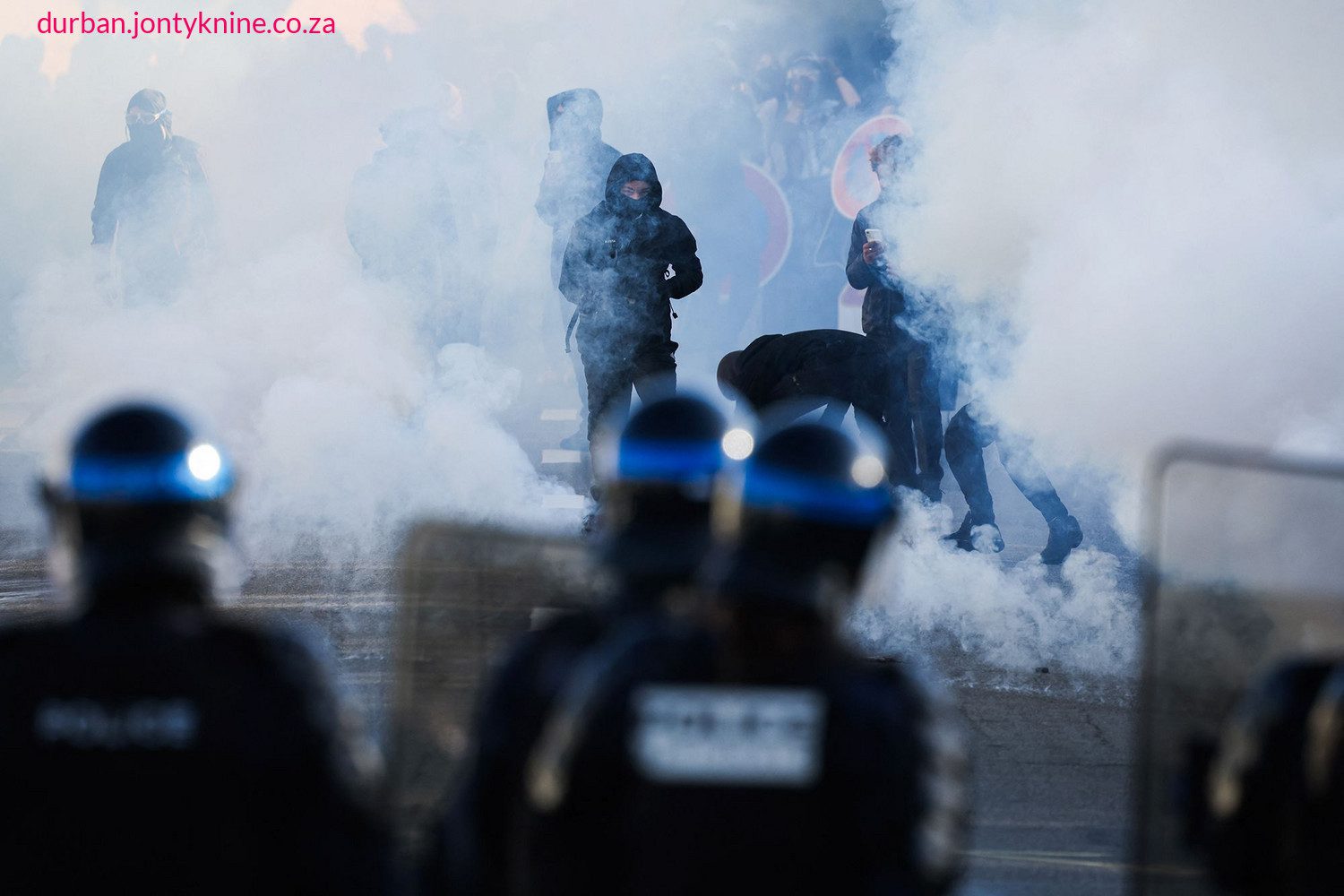
Most of the day remained largely peaceful, with banners, chants, smoke flares, and the typical French protest atmosphere (including grilled merguez sausages). However, sporadic clashes erupted on the fringes—particularly later in Paris and in several other cities—involving hooded or masked groups throwing projectiles, setting fires to bins or debris, and damaging storefronts or bus shelters. Riot police responded with tear gas, baton charges, and in some places water cannons or riot-control munitions.
Casualties, Arrests, and Controversies
Since the protests began, the government has reported heavy tolls it described as the heaviest in decades for the school system:
- Hundreds of teenagers and teaching staff injured (figures cited around 215 students and 85 staff overall).
- Over 700 police officers wounded.
- Specific serious incidents included a 15-year-old in Lens losing a hand after reportedly handling a stun grenade, and other injuries involving eyes or teeth.
More than 5,000–6,500 people have been arrested overall (the large majority minors with no prior records), with roughly 400–500 detained on October 6 alone. About two dozen schools have been burned or significantly ransacked. Rights groups including Amnesty International France have criticized excessive force by police and called for investigations; the police watchdog (IGPN) has opened multiple probes. The government has rejected claims of ordered repression while condemning violence and vandalism.
Political Context and Government Response
The unrest comes months before the 2027 presidential election to succeed Emmanuel Macron (who is term-limited). It occurs amid budget pressures, a fragmented parliament after 2024 elections, and rising support for far-right candidate Marine Le Pen in polls. Prime Minister Sébastien Lecornu has called for peaceful, “structured, legal and democratic” opposition, stated there is “no room for tolerance of violence,” and noted that burning schools does not improve them. Education Minister Édouard Geffray previously met student leaders (without full agreement) and offered a reform plan that protesters found insufficient.
After the large October 6 turnout, Macron met key ministers. The government announced temporary suspension or reorganization of high-school classes in places to allow internal dialogue, and said it would examine building repairs with proposals due by the end of October. Student unions and some organizers have called for continued blockades and further marches (an “Act IV”).
Broader Implications
This is being described as France’s biggest student protest wave in decades, involving a generation (often called Gen Z in coverage) that feels unheard on education investment and future prospects. It has drawn solidarity from teachers’ unions, parents, and left-leaning political figures, while highlighting tensions over policing of mostly teenage demonstrators. The combination of genuine material complaints about school conditions, high arrest numbers of minors, isolated serious injuries, and the pre-election timing has amplified the political stakes. Further actions and government responses in the coming days will determine whether the movement sustains momentum or eases.