

- Russia offered a $15 billion package (buying Ukrainian Eurobonds) plus a large cut in the gas price. Yanukovych accepted it in December 2013 after suspending the EU Association Agreement. Only the first $3 billion tranche was disbursed before he fled. Publicly it was sold as “no conditions,” but it was clearly political: it rewarded rejection of the EU deal and kept Ukraine economically tethered to Russia. Critics at the time noted the lack of transparency and the implicit political price.
- The IMF had long offered financing with standard conditions for a country in Ukraine’s position: reducing energy subsidies (raising household gas prices toward cost-recovery), tighter fiscal policy, and structural reforms. Earlier IMF programs under Yanukovych had stalled precisely because the government refused to implement those conditions. After the change of government in 2014, the IMF agreed a roughly $14–18 billion package (part of a larger international package) that included energy-price increases and fiscal measures.
The claim that the IMF’s 2013–14 offer specifically required “scrap the ban on private land ownership” as a central condition is overstated for that moment. Land-market liberalization was a longer-running reform discussion and became more prominent later.
What happened to Yanukovych
Protests (Euromaidan) began in November 2013 over the sudden suspension of the EU deal and quickly broadened into anger over corruption, selective justice, and police violence. They escalated dramatically in February 2014 after security forces used lethal force (the “Heavenly Hundred” deaths).
On 21 February, Yanukovych signed an EU-brokered agreement with the opposition for early elections, a return to the 2004 constitution, and power-sharing. That night he fled Kyiv. On 22 February, parliament voted by a large majority (including many members of his own Party of Regions) to remove him for abandoning his duties. He went to Russia.
Whether one calls this a “revolution,” a “popular uprising that forced a president to flee,” or (as Russia and some critics insist) a “coup” is heavily politicized. There was Western diplomatic and rhetorical support for the protesters, and far-right groups played a visible and violent role in the street confrontations. At the same time, the decisive acts were Yanukovych’s flight and a parliamentary vote with broad participation. Russia’s subsequent annexation of Crimea and support for separatists in the Donbas followed immediately.
The land claim
This is the most clearly false part. Ukrainian law has long prohibited foreigners and foreign-owned companies from owning agricultural land; that ban remains in force. The land market was opened in stages (individuals in 2021, Ukrainian companies in 2024) with size limits, but foreign ownership of ag land still requires a referendum that has not happened.
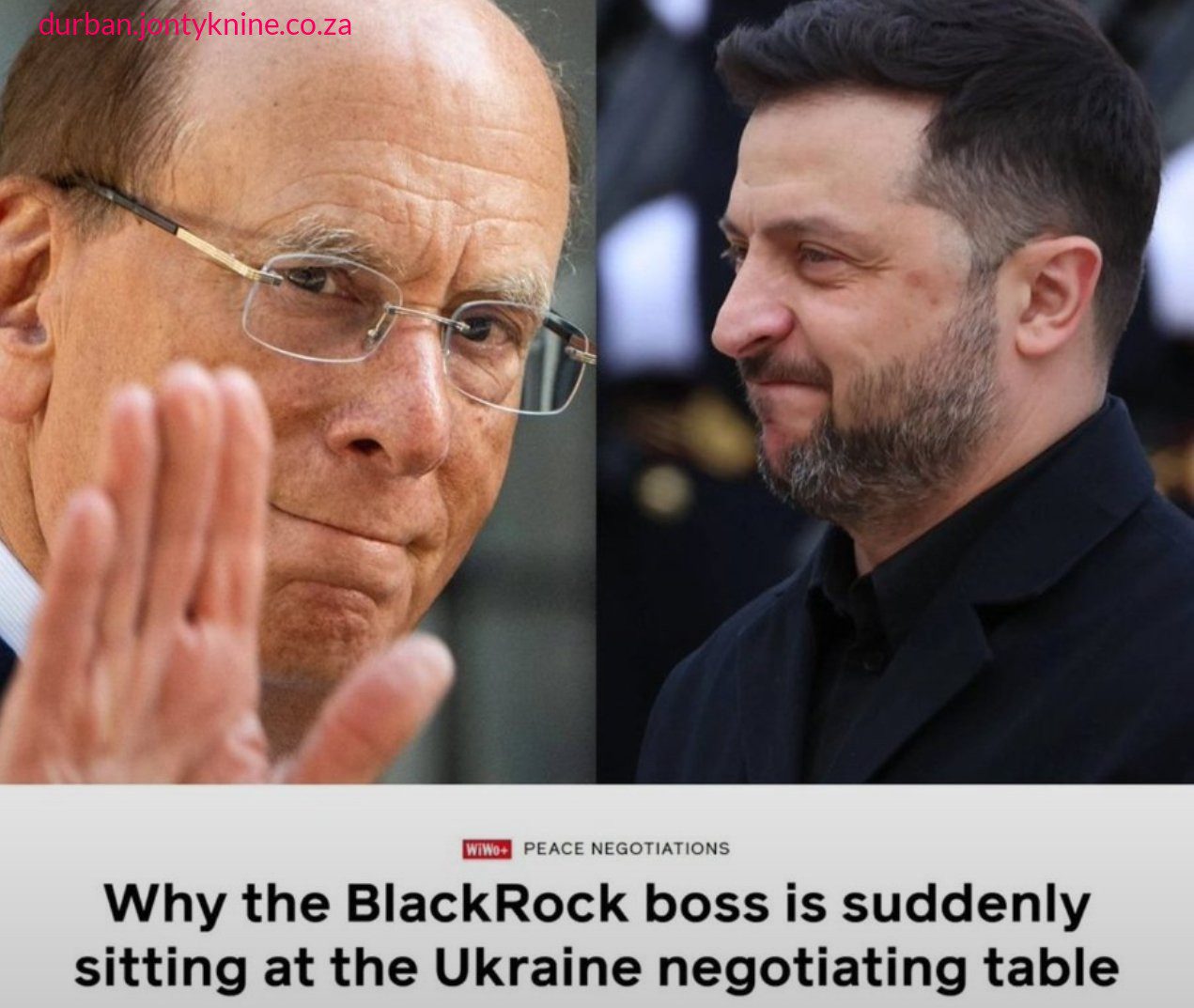
Large Ukrainian agribusinesses (often oligarch-linked, some with foreign minority investors or financing) control significant areas through long-term leases. Foreign firms operate via leases, technology, seeds, logistics, etc. Claims that BlackRock (or “foreign giants”) own “about a third” or 47% of Ukrainian land are repeatedly debunked falsehoods that circulate in pro-Russian channels. BlackRock does not own agricultural land in Ukraine; its public role has been advisory work related to a reconstruction/development fund concept.
Bottom line
Ukraine faced a real financing choice in 2013–14 between a Russian package that came with geopolitical strings and Western/IMF financing that came with austerity and reform conditions. Yanukovych chose the Russian option, protests erupted and grew, violence escalated, he fled, and parliament removed him. The subsequent government took the IMF path. The “Washington-orchestrated coup to open the land market for BlackRock” version compresses a messy domestic political crisis, genuine popular anger, elite corruption, Russian pressure, and Western involvement into a neat conspiracy that does not match the documentary record on either the loans or land ownership.