





Thirteen of these cases occurred between 13 August and 17 September 2026, indicating local (person-to-person) transmission rather than solely imported infections. The majority (15) are in the Western Cape—particularly the City of Cape Town—with three in Gauteng and one in KwaZulu-Natal. Patients range in age from 23 to 50 years (median 36.5), and 18 of the 19 (confirmed + probable) are male, with only one female.
One recent case involves a person who travelled to Spain earlier in September, returned on 14 September, and was tested there after being flagged as a probable case. South African authorities are coordinating with Spanish counterparts to confirm laboratory results.
Western Cape health officials have also reported that two gatherings (exposure events) contributed to clusters of cases. Contact-tracing teams are following up with people who attended those events, offering testing and treatment where needed.
What is mpox and how does it spread?
Mpox (formerly monkeypox) is a viral illness caused by the monkeypox virus. It can affect anyone regardless of age, gender, sexual orientation, race, or socioeconomic status. Transmission occurs mainly through:
- Close physical (skin-to-skin) contact with an infected person’s rash or lesions.
- Contact with contaminated materials such as bedding, clothing, or towels.
- Prolonged face-to-face contact that allows respiratory droplets (e.g., uncovered coughing or sneezing).
The incubation period is typically 6–13 days after exposure but can range from 5 to 21 days.
Symptoms
Common symptoms include:
- Fever, headache, muscle aches, back pain, and fatigue.
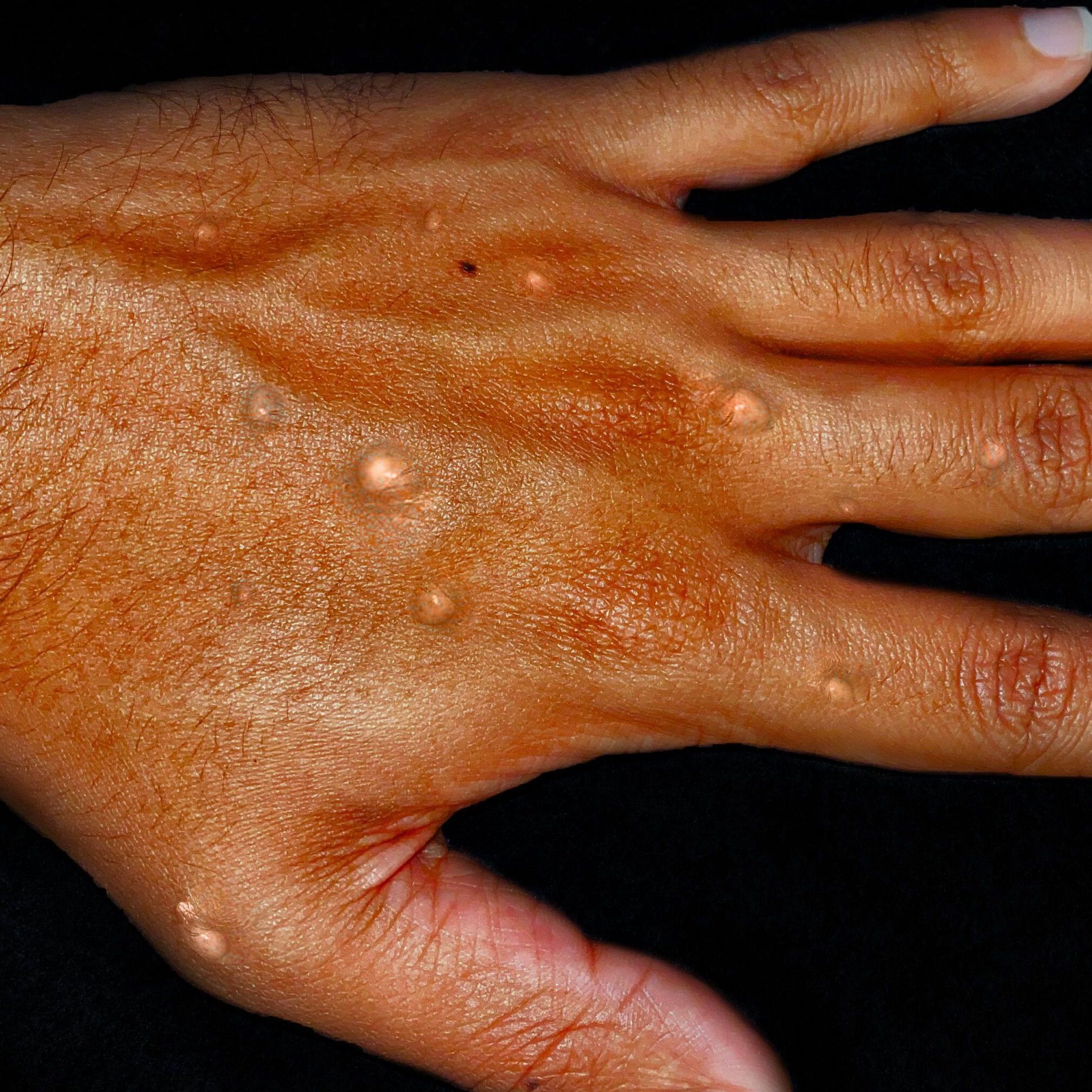
- A characteristic rash or skin lesions that may appear on the face, hands, feet, genitals, or other body parts.
Lesions usually start as flat red spots, progress to raised bumps, then fluid-filled blisters, pus-filled lesions, and finally crusted scabs. Symptoms generally last 2–4 weeks. Anyone who develops these symptoms—especially after close contact with a confirmed or suspected case—should seek medical care immediately and avoid close contact with others.
Response measures and prevention
Health authorities emphasise continued surveillance, early detection, contact tracing, and public cooperation. The government, with World Health Organization support, has secured limited doses of the MVA-BN vaccine and the antiviral treatment tecovirimat as part of the outbreak response. Authorities will prioritise deployment based on risk and outbreak needs. Vaccination should be combined with other preventive measures.
Key prevention steps include:
- Frequent hand hygiene (washing with soap and water or using sanitiser).
- Avoiding close physical contact with people who have symptoms or confirmed infection.
- Not sharing personal items such as towels, bedding, or clothing with an infected person.
- Supporting those who are diagnosed or under investigation and avoiding stigma, which can deter people from seeking care and undermine control efforts.
Mpox is generally self-limiting and milder than smallpox for most people, but complications can occur, particularly in those with weakened immune systems. Early medical evaluation remains important.
This situation builds on earlier mpox activity in South Africa (notably clusters in 2024–2025), but the current surge is notable for its speed of local transmission concentrated in the Western Cape. Officials continue to stress that sustained public awareness and cooperation are essential to contain further spread. For the latest official guidance, refer to statements from the National Department of Health or the National Institute for Communicable Diseases (NICD).