


If you stand along Durban’s coastline today, looking out toward the mouth of the harbor, it is hard to imagine the raw, untamed landscape that early sailors navigated in the 1800s. Long before modern satellite navigation and harbor signal towers, a single beam of light atop the Bluff guided ships into safe waters. The history of the Bluff Lighthouse is a fascinating story of engineering, wartime sacrifice, and maritime heritage.
1. The Original Bluff Lighthouse (1867–1941)
After a 12-year campaign by local mariners and business owners, construction began on Natal’s very first lighthouse in 1864.
- The Challenge: Building a lighthouse on the Bluff was no easy task. Prefabricated cast-iron sections had to be ferried across the bay from the Point to Wests, then manually hauled up steep, unpaved pathways to the crest.
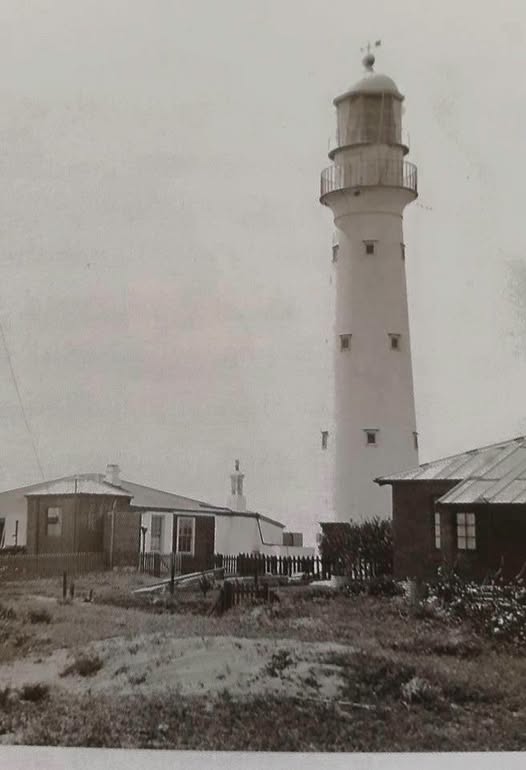
- The Debut: Officially lit in 1867, the 24.5-meter cast-iron tower was the first lighthouse built on the entire east coast of Africa. Perched high above high tide, its beacon could be seen from over 40 kilometers out at sea in clear weather.
- Quakes & Concrete: In 1932, a rare earth tremor jolted the structure and disturbed its mercury-bath rotation mechanism. Inspecting engineers discovered the iron base had corroded, leading famous South African lighthouse engineer Harry Claude Cooper to encase the entire tower in an octagonal, reinforced-concrete sheath.
2. World War II and Truncation
The onset of World War II completely reshaped the Bluff. Due to its strategic position overlooking the harbor entrance, coastal artillery batteries were installed nearby.
Shockwaves from heavy practice artillery fire threatened the lighthouse’s delicate optical lenses. More critically, the tall white tower served as a clear target landmark for potential enemy submarines. In October 1940, the original light was turned off for good, and in June 1941, the tower’s superstructure was truncated. Only the concrete base remained, converted for military use.
Did You Know? You can still see the truncated concrete base of the original 1867 lighthouse sitting near the military grounds atop the Bluff today, keeping watch over the modern Millennium Tower!
3. The Modern Successor: Cooper Lighthouse
To replace the original light, two new lighthouses were planned to guard the northern and southern approaches: Umhlanga Rocks Lighthouse to the north, and Cooper Lighthouse further south on the Bluff near Brighton Beach.
Commissioned in 1953, Cooper Lighthouse stands 26 meters high and is named in honor of engineer Harry Claude Cooper—a rare distinction, as lighthouses are almost always named after geographic locations. Painted red with a clean white band, it continues to flash every 10 seconds, guiding modern sea traffic safely along Durban’s coast.
Preserving Durban’s Maritime Legacy
Whether you are looking at the weathered ruins of the 1867 original or watching the bright sweep of Cooper Light on a clear night, the lighthouses of the Bluff remain an essential part of Durban’s story. They serve as constant reminders of the engineers, lighthouse keepers, and sailors who helped build our port city into what it is today.